
You can find Edwin social media as @edwincov
Have an idea you want to send? Send me an email or DM! hello@horrorstory.com
My other podcast mentioned: ScaryStoryPodcast.com
You can get these ad-free through ScaryPlus.com free for 14 days, then 4.99 per month. Cancel anytime.
Get in touch on HorrorStory.com
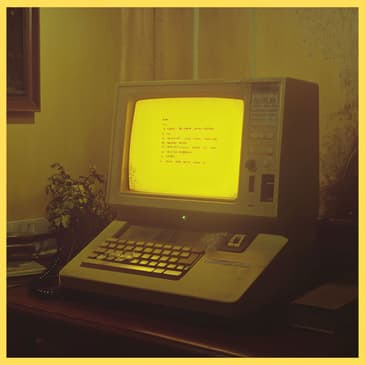
In a quiet village tucked away in Cheshire, England. There's a small cottage with whitewashed walls and aging roof and a strange energy about it. Most people wouldn't notice anything unusual, but inside, something strange once happened, something that didn't belong to any one time. Okay, so it's nineteen eighty four. A man named Ken Webster, a high school economics teacher, moves into the cottage with his girlfriend Debbie. Ken is quiet, observant, and not the type to chase ghosts or talk about spirits. His interests are rooted in edication and politics, not the supernatural. But what would unfold in the following months would blur those lines entirely. At first, it's just an old house meadow cottage, slightly damped, awkwardly shaped rooms, cold in the winter, but cozy enough they start to settle in. Everything seems ordinary. Ken brings home a computer. It's a BBC Micro, one of the earliest personal computers. He borrows it from the school where he teaches, just for a bit of experimenting. He's not trying to crack open time or summon anything from beyond. He just wants to write a few less implans, but what evening, He powers it on and notices something odd. A file appears on the computer that he didn't create, and inside was a message. Well it's not just a message. It's written in a strange English, archaic English, something like you would see in a Shakespeare play, but even older and less refined. It reads true, are the nightmares of a person that fears safe? Are the bodies of the silent world. Ken thinks it's a prank, maybe one of his students got into the computer and decided to mess with him, So he laughs it off at first, but then another message appears, and another Each is written in a kind of old world English, inconsistent yet hauntingly poetic, signed simply by l W. The messages seem to know about the house, it structure, its energy, and they refer to it as their home, but from a different time, the very different time. At this point, Debbie gets nervous. She doesn't want to stay in the house alone, and friends who come over feel off, like something's watching them, like some things listening. But the messages keep coming. Ken tries a trace where they would be coming from, so he disconnects the computer and leaves it unplugged, and still somehow the messages appear, files appear on floppy disks without explanation. Words appear on the screen even when no one has typed them. And that's when he starts keeping records a log of each message, each anomaly. And that's what I looked at. So in this episode, we're going to explore one of the strangest digital mysteries, one of possible communication with ghosts or proof of time travel, all done through early computers. My name is Edwin, and here's a horror story. The author of the messages eventually introduces himself. He says his name is Lucas. He claims to be living in the year fifteen forty one in the exact same house, or where the house would be. He describes the land, the surroundings, the structure. He speaks of farming and religious tensions and fear of being labeled a heretic. And most of all, he speaks of confusion because to him it is Ken who is the ghost. Now imagine that for a moment, you're in your home in nineteen eighty four and your computer is receiving messages from someone someone who says that you are the one haunting them. You are the intruder, the spirit, the demon. Ken shares the messages with a few trusted friends, and one of them, a language teacher named Peter Trinda, takes a closer look. He says the dialect isn't perfect, but has authentic elements, structures and phrases that would be difficult to fake. That's unless you're some skilled academic in tudor English. It's not conclusive proof, but it's enough to make Ken take things more seriously. Still, he wants answers, so he starts writing back, and that's how they communicate through the computer. Bailey files for one another conversations across time, embedded in floppy disks and code. Lucas writes about his fear of being accused of witchcraft, about strange figures appearing at the edge of his vision, about light boxes that glow with no candle. Ken writes back, asking questions, trying to pin down dates, names, anything to verify Lucas's story, but verification is hard. There's no record of a Lucas Waynman living in the area in fifteen forty one. Then again, records from that period are patchy at best. The land beneath. The house does have old foundations, though locals say it's built on or near something older, and no one's exactly sure what. And as these digital letters continue, Ken begins to wonder if he's communicating with someone real, or if something is using this persona to reach out, to manipulate or play. But the thing is, Lucas doesn't just ask questions. He knows things about Ken, about Debbie, about the house as it was and as it will be. He describes a copper pan in the kitchen, a crack in the wall no one else had noticed, detail so small that Ken isn't sure how anyone could know them unless they were standing there. And then one day Lucas goes silent, and for a week nothing happens. Ken tries to prompt him, but no response until a new message appears. It's shorter, sharper. We are watching, but it's not signed by Lucas. It's signed by someone or something else. And this is only the beginning. Ken thought it was over. After the chilling message we are watching, the screen went dark for a while, nothing came through. The howls felt still again, as if whatever was lingering in the margins had withdrawn. He let himself believe it might have finished. But a few days later another file appeared on the BBC micro and with it a name Lucas. The tone was diff frightened, cautious, but not menacing. Lucas seemed confused. You see, in his mind he was the one under siege, and from his perspective, these glowing messages on the box in his home were being left by spirit, by Ken and Debbie. To him, they were the invaders. So he wrote, I am most afeared. I do not know who make the writings? Is it God or the devil? Who are you that live in my house? Lucas believed he lived in the year fifteen forty one, during the reign of King Henry the eighth. He described his world in oddly vivid detail, simple farm tools, religious upheaval, fear of witch finders. The tone of his writing was a strange fusion of Middle and early Modern English. It didn't sound exactly like Shakespeare, though, but it felt old authentically. So sentences looped and curled in ways at modern language no longer does, and he wrote, what strange words you speak? You are a fine spirit. I have no want to afray you. You are good. Yes. Lucas continued describing the land around him. He mentioned the leam side, a term that referred to a boundary of the property, and spoke of green men carved in old beams, symbols linked to old English folk traditions. And then there were these moments of pure poetry like this one message. Can I write on behalf of many? What strange words thou speak? Although I must confess that I hath also been ill schooled. Sometimes methinks alterations are somewhat barful, for they break many sleepeth Thou art goodly man, who hath fanciful woman who dwelled in mine home? I have no want to affray, barful, fanciful, ill schooled. The voice was strangely gentle, thoughtful, even if difficult to interpret. But what disturbed Ken was not just the tone, it was how specific it was. Also, Lucas was frightened not just of Ken and Debbie, but of his own time. He referred to accusations of witchcraft, to rumors about demons inhabiting people. He feared being found out for communicating with spirits. He feared the church. He asked at one point, be thy people also devils? I pray not for I have seen devils before, and they do not write you are not so frightful. Ken tried to steer the conversation towards something more concrete. Could Lucas provide dates, names, or proof. Lucas offered bits and pieces. He claimed to have studied at Braisnell's College in Oxford before being expelled under suspicion of sorcery. Ken wrote to Braznell's College hoping for a record. Nothing came back. No Lucas wayman, no matching story. But what would a record from fifteen forty one look like? Even if it existed, would it have survived? Would have spelled the name the same way? It only added to the mystery. Sometimes Lucas would talk about the future, not Ken's presence, but something beyond. Even that, he seemed to know he was caught in between times, and he once wrote, it is as though mine thoughts do cross thy time like the river, sometimes swift, sometimes slow, but always forward. Mayhap thy time and mine will join as one. Ken began to feel like this wasn't just a man from the past. It was a presence anchored somewhere in time, but bleeding into his own there was a sense of fragility to Lucas, a man just as confused and scared as Ken. Was not malevolent, just lost. There were moments when things didn't quite fit, slips, words that weren't quite accurate for the time, ideas that felt too modern. Some skeptics pointed out that certain phrases Lucas views didn't appear in English until later. Others even argue that the mistakes could be authentic, a symptom of a poorly educated role man trying to write in his second language or dialect. Lucas, for his part, didn't claim to know everything. He at one point admitted, mine writing is not like thine. It is difficult to find the right word. Ken didn't know what to make of it. He wanted to believe it was real, that he had found something extraordinary, but doubt lingered. Was Lucas really a man from the past, or was he a character created by someone in the present, or worse, was he a puppet for something else entirely? And then, just as Ken began to feel a kind of strange connection to Lucas, a strange empathy, a new presence returned, but this one was very different. The next message was short, clipped, not poetic at all, and it read there was no cause for fear. We are monitoring the situation. Continue communication, do not deviate. It was not signed by Lucas. That was a first message from twenty one oh nine. Lucas wasn't alone, and neither was Ken. At this point, Ken's home didn't feel like a home per se. Meadow Cottage had grown silent in a strange way, as though the walls were awaiting. Ken noticed the stillness, not the peaceful kind, but the kind that settles right before something happened. The messages from Lucas had become erratic. He no longer responded with the same warmth or openness. Sometimes he wouldn't respond at all, and when he did, it felt like something had like he was being watched. And then came the messages that weren't from Lucas at all. They appeared without an introduction, without warning. The tone was different, dry, stripped away of any personality, as if composed by a machine trying to impersonate thought. One of the earliest read, we are twenty one oh nine. We are communicating with you to resolve a paradox. I believe here they were referring to the year twenty one oh nine. There was no greeting again, no explanation, just that, and Ken didn't know what to do with it. Was this a new prankster, a new player in the game, or something worse? So Ken responded cautiously. He asked what they meant, who they were, what paradox, and more importantly, what they wanted from him. The reply came days later. Your curiosity will be satisfied in time. The situation is delicate. We must advise against future interference without permission. Continue to communicate with Thomas Thomas. That was the name Lucas had recently revealed as his true identity, Thomas Harden. According to him, Lucas Weynman had only been a pseudonym, meant to protect him from the accusations he feared in his own time, the mask behind which he could hide from his church, his neighbors, and now maybe something else. Now at this point, Ken wasn't sure who to trust anymore. Lucas Thomas seemed to be in pain. His messages had grown fearful. He mentioned being interrogated of men coming to question him. He described voices that weren't his own. The pressure in the house, lights in the sky. Meanwhile, twenty one oh nine continued their brief robotic dispatches. They didn't write often, but when they did they were blunt, confusing. They seemed to be monitoring Ken and Thomas as if both were lab rats and an experiment that neither fully understood, and they once wrote, there is another person involved. You will meet him soon. Do not reveal the experiment. It is essential that time is not disrupted. It appeared to be not a haunting anymore. It felt bigger than that, an operation a design. Ken started to feel watched in a very real way. He would wake up in the middle of the night and swear that the air in the room had changed. Debbie, usually calm, began to loose sleep. She reported hearing movement in the cottage when no one else was home, flickering lights, static sounds, the sense of something standing just behind her, just past where the mirror ends. One day, Ken found a message, not on the computer, but scrawled on paper in the study. Debbie swore she hadn't written it. It was a quote from an earlier twenty one oh nine message, no signature and no explanation. So now even the boundaries of the computer seemed to no longer contain whatever it was trying to get through, so Ken turned to his log again. He began comparing the messages. Lucas's writing had an emotional current running through them, a kind of desperation in poetry. But twenty one oh nine, well, their words were sterile, controlled, and the more can try to engage, the more their answers resembled riddles or evasions. So he asked them, are you people machines, spirits? And they responded, we are as you are the light that carries the message. Do not seek form, only function. Now that makes no sense to me, or maybe that was the point right. Sometimes Lucas or Thomas would seem aware of twenty one oh nine. He would write about the voices beyond the window, the ones that told him to stop writing, that he was meddling in what should not be seen, like this one message, where it read they come in dreams, now, not in mind, but in hers. I know not what he wants, but they say the gate must not stay open, that the bridge will break. I have written too much. And then Debbie began dreaming of the cottage in ruins, of a tower made of light, of pages flying through the air. She stopped reading the messages entirely. She didn't want to know anymore. Ken, though, kept pushing. Something in him needed to understand what was happening, whether it was time travel, sychosis, or something older. So he reached out again to twenty one oh nine, Why are you doing this? Why now? Why us? The stability of your section in the multiverse depends on your cooperation. We are not your enemy, but we will cease communication if actions compromise a plan. So it was like being told you were part of a machine didn't know existed, one where pressing the wrong button could break something fundamental. Just when Ken thought it couldn't get any more tangled, twenty one oh nine sent one final message for that week, Thomas is more important than you realize. Do not let him fall. The bridge holds for now. It was clear now that whatever was happening wasn't about just one man in fifteen forty one or one teacher in nineteen eighty four. There was a third layer, a system beyond their time, a hidden architecture that neither of them could see. And Ken, well, he was somewhere in the middle, trying to make sense of the messages that came from centuries apart and yet landed at the same time on the same screen and the same little cottage. And then the question echoing in his mind wasn't what is happening? It was how long has it been happening without us noticing? Remember Ken had always thought of himself as grounded. He didn't chase ghosts or play with wuiji boards. He was a teacher, pragmatic by nature. But now he found himself standing in his living room, his living room, and wondering if the past was bleeding through the walls, wondering if the future had already happened, and now writing its way backwards through time. Now, I understand this is all kind of confusing, but hopefully you've kept up for it until now. You see, the messages up to this point were piling up. Lucas or Thomas was writing again, more often than before. There was something frantic in his tone. Now the calm, curious voice from earlier messages was gone, and it was replaced with fear and urgency. One other message read, I must not write more. They have told me this. They say you are dangerous, but I see no devil in you. Ken, only confusion. It wasn't clear who they were, but whoever they were, Thomas was terrified of them. He began describing strange figures people arriving in his village asking questions about him, A man in dark robes who spoke no English but carried a symbol he wouldn't describe, a local priest that had started watching him. Rumors spread that Thomas was communicating with unseen spirits, that he was cursed, and he wrote, I did not ask for this, ken, but I am a man. I plow the field, I read what little I have, and now I am torn between two heavens that know not what they are. It was language like that, biblical, poetic and broken, that made can believe, even if he couldn't explain why. The things that metal cottage were changing too. The air in the house was feeling thicker, It was charged. Debbie kept seeing flashes glimpses of something at the corner of her vision. The lights flickered with no cause, the TV turned on by itself, and then there were the messages, not just on the computer anymore, but appearing elsewhere. No pads, mirrors and ones on the inside of the refrigerator door and then there were the dreams. Ken started waking in the middle of the night with fragments, visions of towers made of glass and fire, of people standing in silent rows, typing into glowing rectangles, and one dream, Lucas stood across a river and said nothing, just pointed behind Ken. He turned and there was nothing. Ken began riding to twenty one oh nine more aggressively, demanding answers, asking who they were, what they were doing, and whether this had been some kind of long running experiment, and they responded, you are part of the construct. This experiment is necessary. The outcome remains undecided. Air cooperation continues to be crucial, and he pushed further, what experiment? Why involve Thomas? Why us? And then another message, Thomas must write, he must record what he sees. The record will hold the key. Do not interfere further, Do not initiate outside contact. And that last line chilled Ken more than anything else, because he had reached out. He had sent messages to Brazno's college, to local historians. He had even begun writing a journal on his own just to keep track. But now he wondered if someone or something was watching. Had he broke in a rule, the messages from Thomas continue to deteriorate. He no longer addressed Ken directly began writing in riddles and symbols, in lines that seemed like fragments of prayers or spells. One said, the owl has left the chapel. The sky turns iron, I walk, but the earth is no longer mine. I have seen the end. Another simply said, they are here. It was at this point when Debbie stopped sleeping in the house. She stayed with friends in the village, and Ken remained trying to hold onto some sense of control. But the computer no longer responded to him the way it once had. Sometimes it would freeze, sometimes it would boot up to a message already waiting when he hadn't seen arrive. And he once asked, are you still Thomas, and the response I am, and I am not. They have made a door in me I am held open. Ken didn't know what that meant, but he felt it something was slipping through that door, and whatever it was, it didn't care about logic or time or boundaries. He began to suspect that twenty one oh nine was not a future civilization, or not in the way that we understand it. Maybe they weren't from the future at all, Maybe they were existed outside of time, entirely using it like a tool, moving between moments as easily as we flip pages in a book. But even books can tear, and the final message can received. Before the computer went silent was short. The bridge holds for now, but Thomas is slipping. Prepare. That night, Ken woke up and walked through the house. The walls felt thin like paper. He stood in the center of the living room and whispered into the dark. He said, are you still there? And from the other side of the room, somewhere between the space where the light ended and the shadow began, he heard a voice, not out loud, but in his mind. It said, you've already asked that, and if we've already answered. There was no ending, no final message that explained at all, no grand reveal, no curtain pulled back to show the wizard behind the screen. One day, the messages just stopped. No flicker on the monitor, no sound. The files were just gone. The strange names Lucas Thomas twenty one oh nine went silent. The cottage returned to stillness. The house can once thought as an intersection between times, a liminal type of machine became just a house again. But of course it wasn't just a house anymore to him, at least for months. He waited, booted the BBC micro typed into blank files, left the messages addressed to no one. Sometimes he read back through the old logs that he wrote, but nothing came. The bridge, whatever it had been, had closed. Ken would later publish a book about what happened. It was called The Vertical Plane, which is what I'm basing a lot of my information on, and it was released in nineteen eighty nine. There it laid out the entire story as best as he could, the logs, the language analysis, the timelines, and it was a part record, part plea, like an attempt to document something that had no explanation and to maybe just maybe find someone else who had seen the same. It didn't make him famous. The story never caught fire the way other paranormal tales did. It didn't fit into a clean category. It wasn't a haunting. It was just time travel. I guess. It wasn't a hoax, or at least not an obvious one. It just sat uncomfortably between science fiction and folklore. Between an experiment and hallucination. People didn't know what to do with it, and that maybe is what made it so powerful. To this day, no one has proven what happened at Metal Cottage. There are no official investigations, no irrefutable transcripts, no secondary witnesses outside of Ken, Debbie and a handful of friends. And yet those who have read the messages, the real ones preserved from Ken's records, often say the same thing. They feel real, not because of the details or of the language, but because of the emotion in them, the fear, the confusion, the longing. Whoever or whatever wrote those words at the heart of a person who was trapped, whether in time or in thought or in story. Skeptics argue, of course, and they're not wrong to Maybe it was an elaborate psychological projection. Maybe Ken wrote it all himself, unknowingly. Some have suggested said cryptomnesia, unconscious recall of linguistic structures he didn't know he knew. Others propose a hoax, a private art project that went too far, or even a share delusion between Can and Debbie fueled by stress, isolation and a flickering screen. But then again, if that's true, if this was a delusion or a story, why did it work so well? Why do people still think about it? Why do we all go down this rabbit hole that doesn't really need to anywhere. Why do new readers discover the messages and fall into the same questions Can asked in nineteen eighty four? Who is Lucas? What is twenty one oh nine? What did they want from us? Maybe the truth isn't in the messages. Maybe the truth is in the questions they raised. What if time is in a straight line, but if consciousness can echo backward like a sound in a cave, and the future is as fragile as a past, and we're all, in some strange way sending messages to ourselves. I know this is getting a little trippy, but it's really hard not to go down this path and really question what happened, Like what if ghosts aren't the dead? What if they're echoes of our own thoughts displaced in time? Just a few things to think about. I'm not trying to be overly philosophical here, but Ken doesn't speak much about it now. He gave a few interviews over the years, and most of them were very cautious. He never tried to capitalize on the story. He never tried to make it bigger than it was. In fact, some say that he'd prefer it to be forgotten, to return like Lucas silence, and to meddle cottage. Well, it still stands. The walls have been painted over, the rooms rearranged, a new family lives there now, and as far as anyone knows, no strange messages have appeared, no glowing screens, no ghosts of the past or the future whispering across the wires. But sometimes people who visit say the air feels different, like you remember something like the hows though quiet has not quite let go of its place and the story. Maybe that's the final message, not the one on the screen, but the one that lingers the time isn't fixed, That stories don't end. That Sometimes the strangest things are the ones that don't try to convince you, the ones that just want you to listen, just in case, just in case, someone is still trying to get through. So was it real? That's the question here, right, That's the part that haunts people the most because the answer depends on what you mean by reel. Because look, these are known as Addleston messages, and they are not some internet myth or a campfire tale. There are documented account written by Ken Webster and published in a book actually called The Vertical Plane. Everything we've talked about, the messages appearing on an old BBC microcomputer, a man from fifteen forty one claiming to live in the same house, a future intelligence from the year twenty one oh nine. It's all in that book, and Ken never once claimed it was fiction. He didn't profit from the story, he didn't tour radio shows or television circuits for long. In fact, he mostly disappeared from public view. The messages, according to him, were real, strange, eerie, impossible, but real. No one proved that it was a hoax. No one came forward to confess, and no one showed how it was done. And yet no one has found hard evidence to prove it actually happened either. Some posts on Reddit that I found mentioned that Debbie actually posts on online forums every once in a while, but has not made any public appearances. The appear to want to remain completely private, and that Can may have used a pen name in order to not be identified. There are no recordings, no surviving floppy discs, that can be verified. No photos of the screen while the messages appeared, Just the book, the recollections and the transcriptions that have been passed around ever since. You won't find historical records confirming Lucas Wayman or Thomas Harden living in Duddleston in the fifteen hundreds. Now that doesn't mean that didn't exist. Records from that time are patchy, but it also doesn't help the case. So was it all in an elaborate prank, an experiment or a psychological episode? No? No, let me know what you think. It's very interesting actually, and I'm trying really hard to not dive into this even more, so we'll just leave it at that. Anyway. This episode was produced by me Edwin Corujez, with a strong reliance on the book that I mentioned, The Vertical Plane by Ken Webster, published in nineteen eighty nine. I have a list of ideas that you've sent for me to research, so I'll keep you posted on what's coming next. If you like this show, you might also like my other show, Scary Story Podcast, where I share some eerie stories that I come up with. You're subscribed or following the podcast. I'll be back next week. Thank you very much for listening. Keep it scary everyone, See you soon.