
You can find Edwin social media as @edwincov
Have an idea you want to send? Send me an email or DM! hello@horrorstory.com
You can get these ad-free through ScaryPlus.com free for 14 days, then 4.99 per month. Cancel anytime.
Get in touch on HorrorStory.com
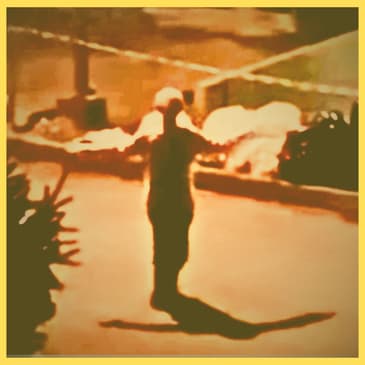
It starts on the edge of Belgrade in its Veestara, Serbia, a quite district, the tree lined buildings that all begin to look the same when darkness arrives. It's twenty nineteen and rumors are beginning to drift through the city. People are saying that there's a woman out at night dancing. Now it might not seem weird, especially for those of us in Los Angeles or New York, considering TikTok trends and such, but this was different. This was anything but a joyful dance. According to witnesses, she was seen near a hospital where the streets cut unevenly between traffic and pedestrian crossings. Drivers reported that she ran out in front of vehicles, arms jerking with unnatural precision, spinning, gliding, stopping, and when she saw someone watching her, she pulled out her knife. One resident said that she threat and serbian, chasing after people, especially those who try to film her or get too close. Others were terrified that she might hurt someone who couldn't run, a child, a pregnant woman. The local police got involved, and they investigated for a while. There's talk at the local news and then nothing to silence. Now It could have ended there, just another strange woman, possibly unstable, disrupting the streets, scaring people, and eventually fading back into the shadows of the city. Another eerie encounter swallowed up by urban noise. And yet three years later, in twenty twenty two, the TikTok video surfaces. It's posted by a user named aatc thirteen. In the grainy, handheld footage, a woman stands alone under a flickering street light. She's moving slowly in a way that suggests something between the ritual and a trance. Other video seemed to capture her as well. Her steps echo faintly, and then she stops. She looks up, stares directly at the camera, and then charges. You don't see the knife until the last moment. The person filming stumbles, drops the camera, and the video cuts to black. Now what follow it was viral wildfire. The video racked up over seventy seven million views. Dozens of accounts we posted it, edited it, dissected it. Some claimed that it was a hoax, and others were convinced that they'd caught something supernatural. People began telling their own stories, or at least stories that they claim to wear their own. Some said that she was a ghost, Others swore that she was a demon cursed to dance for eternity. One Reddit post even named her Mitra, supposedly the Ambassador of Death, a figure who, according to a legend, required human sacrifices to resurrect the King of Serbia. There was no evidence for any of that, no missing persons connected to her, no deaths, and no arrest. That's stuck. In fact, local authorities never confirmed whether she was ever found again at all. But once the footage went viral, the myth had already taken shame. It wasn't just a woman in Belgrade anymore. And it's here, in that space between real danger and imagined horror what we're standing now. And as I visit requested topics for this podcast, I watched video after video of sightings of the Serbian dancing Lady. I looked up its origins and found connections to folklore, some that speaks of witches and creatures that have scared us for hundreds of years. So in this episode, we'll look at how this viral terror started to mirror something much older, something deeply embedded in Slavic method. Because while Mirah might be new to the internet, her shadow is not. It's been dancing for centuries. My name is Edwin, and here's a horror story. By early twenty twenty three, the Serbian dancing Lady had become a trend, a TikTok obsession. They started slowly with reposts of the original clique from Belgrade, and then came the reactions, the edits and the slow motion analysis, the sound remix, of course, and the recreations teenagers dressed in makeshift shawls mimic. The dance YouTube channels published dramatic retellings if you see this woman run. Fake sightings were stage and alley ways and school parking lots. People leaned into it, and hey, it's part of the job to turn the eerie into entertainment sometimes. But some people believed they picked apart the original video, framed by frame, and they said the way that she moved didn't look human. They pointed out, had her head turned unnaturally, like something animatronic. Some claimed that the video couldn't be faked, that the fear in the camera operator's breathing was too real, and one Ready user summed it up like this, A random, crazy lady from Belgrade became a folklore creature on tik Tok. But in the middle of all this digital noise, strange things started to surface. Stories with date allegedly sightings from the Dancing Lady go back to nineteen ninety eight. That year, two separate accounts appeared on community blogs, one from a man calling himself Nico, who said that he and his mother were walking at night when a woman jumped from the shadows, demanding his mother's life for a sacrifice. The second from his friend Solomon, who later tried to film her and claimed that she looked him in the eye and screamed, your mother's soul his mind. Now, there's no evidence of either of these stories being true, but they spread anyway, reposted, reworded, and recycled. Now was the original woman mentally ill? Who's to say? Was she dangerous? Possibly? Was she ever arrested? Some people say yes, others say no. Some even claim that she disappeared like she had never existed at all, And the fog of digital myth making facts tend to vanish. But here's what we do know. She was real. In twenty nineteen, a woman was seen in Belgrade Vizdara district, dancing erratically in the street. She was welding a knife, and local residents called the police. The media reported it, so we can consider that an actual fact. So by now the Serbian dancing lady had taken on a life of her own. Online, people began piecing together her identity like they were unraveling some digital myth and her name. Some said Mirah and her purpose to collect human souls, her mission to resurrect a long dead king of Serbia. Now, of course, again there's no record of that existing, but it didn't matter. The most viral version of the legend paints Mira as something more than human, something ancient. She isn't just a woman with a knife now, she's more like an ambassador of death, cursed to dance in the dark until she's fulfilled into ritual, the one that no one fully understands. Some claim that she was part of a forgotten cult. Others said that she had escaped from an asylum, and a few insisted that she wasn't even alive. But the truth was probably none of that. You see, here's where it gets interesting. The way she's described it's like a trance like dancing style, the eerie movements a sudden switch from passive to violent, and then it starts to echo this kind of ancient pattern. People began comparing her to Baba Yaga. Now, if you didn't grow up with Slavic folklore, I didn't either, But the name might sound a little bit strange for millions of children across Eastern Europe. Though Baba Yaga was a bedtime threat, she wasn't the witch with a candy house. She was way worse because she was wild and powerful. You couldn't trust her, but you couldn't ignore her either. Here's a story. Baba Yaga lives deep in the forest in a hut that stands on giant chicken legs and spins in place. She flies through the sky in a mortar, steering it with a pestle, sweeping away her tracks with the broom. Sometimes she devours people whole, especially children. Other times she helps lost heroes, gives them advice, or tasks them with impossible challenges. She's cruel and wise, ugly, magical death, and a grandmother. The contradiction is the point of that, just like the Serbian dancing lady, some stories describe her in a traditional Serbian clothing. Her dance resembling the coolo, a communal folk dance rich with symbolism, always performed in a circle. But this dance is in communal, it's dance on your own. It's erratic, corrupted, like a ritual that you're making up on the spot. At least that's what it looks like, though I'm sure there's some deeply rooted techniques in it. And the way she looks at the camera, that's another recurring theme. People warn don't look at her in the eye, and they say that the eyes reflect something not human, that if you make eye contact you'll be haunted forever. Now, compare that with Baba Yaga, who was said to sense the Russian soul in a visitor before they even knocked on her door. She could smell your fear, and if you weren't careful, she would fry and eat you before you could explain yourself. In Slavic cultures, these stories were cautionary tales, yeah, but they were also expressions of power. Baba Yaga and spirits like her were unpredictable forces. Female, yes, but not gentle. These were women who didn't behave who lived outside society, who could destroy or help you depending on their mood, and that's what makes a Serbian dancing lady so unsettling. And whether or not you believe she's real, her presence taps into something primal. So it's no surprise that people started pulling in other figures from Slavic lore. We'll meet some of them soon, but first we have to talk about how this story, born on a quiet street in Serbia was fed to the world by a media machine that profits from it. That's where we're headed next. I find myself in this dilemma quite often. There are so many interesting stories out there, but some might only be entertaining to me, so I need to find a balance. Now, this is what can turn a solid interesting story into a trend with made up parts to make it appealing. So let's look at how a woman dancing with a knife in Belgrade became a global figure of dread. But you have to understand two things. First, what immans by the modern media machine, and about this old witch with iron teeth. So let's start with the witch again. Her name is Baba Yaga. You've heard her mention before, but it's worth repeating. She's one of the oldest, strangest and most powerful figures in Slavic mythology. Her origins go back centuries, possibly to pre Christian times, when Slavic people practice animism and revered nature, spirits, demons, and dualistic deities. How animism is to believe that everything in nature, animals, ease, rivers, even rocks, has the spirit or consciousness. In pre Christian Slavic culture, this meant the world was alive with unseen forces. Forests had guardians, rivers had spirits, and every shadow might be watching. This world view laid the foundation for many of the supernatural beings in Slavic mythology. Baba Yaga's appearance is terrifying. Iron teeth, a long hooked nose, a body both ancient and impossible to define. Sometimes she eats children, sometimes she helps them. Sometimes she's a test that makes or breaks a hero, and that ambiguity where you don't know if she's good or bad, is what makes her survive. The Serbian Dancing Lady takes that ambiguity, and that's what makes her stick in the imagination. In some versions of the viral tale, she's a villain and others she's tragic. One threat claims she's seeking a lost child. And others said that she dances to keep a curse at bay and other claims that she's possessed. The truth is, we don't know, right, and that's what makes her feel older than she is. It makes her feel mythic. Do you see where I'm going here? And I don't want to seem like a big old story analysis buff here, but it's really cool to think about Baba Yaga compared to the Serbian dancing Lady. Now, the ways aren't just coincidence here. Babar Roga, for example, a Balgan version of Baba Yaga exists solely to frightened children in Bosnia and Serbia Montenegro Croatia. Parents have warned kids for generations, if you don't behave babar Roga will come for you. Sometimes she hides in the closet, sometimes under the bed, and sometimes she dances in the street. But the real twist in this story isn't ancient. So when the viral image of the Serbian dancing Lady borrows from centuries of folklore the way she and all that, thanks to today's media landscape, it got a little messy in Serbia, especially with the news. Between September and December of twenty twenty one, this watchdog group called CRTA and Ely's fifteen Serbian media outlets, they identified five hundred and fifty nine different cases of disinformation, and more than half of them from just two tabloids, Halo and Kuri. These are widely read and they receive public funding even now. That means that taxpayers are at least partially paying for disinformation to spread. And it's no surprise then that when stories about her knife wielding dancer emerged, they were distorted almost immediately. Some articles claimed that she had been arrested, others claimed that she couldn't be found, and still others insisted that the police had declared her supernatural. None of those reports were ever confirmed, and at the same time, TikTok was doing what it does, amplifying spectacle. The platform's algorithm rewarded fear. Content creators saw what worked and ran with it, and so we ended up with this strange digital creature. Part news story, part TikTok trend, part folklore. A dancing woman in a long skirt appearing on the side streets at night, charging at you with a knife, and in that haunting, she joined a long line of Slavic women, spirits, witches and shadows who just live right outside the firelight. So now, unlike Baba Yaga, who lives in the woods, or the Rusaka who waits in the river, the Serbian Dancing Lady lives in your pocket, on your screen, shared between strangers with a few taps and a caption that simply says, don't look her in the eye. There's something strange about the Serbian Dancing Lady, and maybe that's why her story resonated the way that it did, because even if we don't believe in her, we recognize her the way she moves, the way she watches, that strange blend of madness and ritual it echoes with something deeply human. That fear of being watched and chased and cursed kind of reminds me of the clowns back in twenty sixteen. Now, that fear has lived in Slavic culture for centuries, that fear of the feminine unknown. Because while Mira, if that's even her name, might be a product of viral myth making, the ground she stands on is ancient, and that ground is soaked with stories and real ones, verifiable ones documented across generations. So now let's turn to those, because long before there was a woman dancing in the streets of Belgrade, there were other women that didn't go viral. They went unseen, and that's what made them dangerous. So here are some legends, right, Let's start with Ukraine and Moldova, along with Easter River. There, for over two hundred years people have told of the Rusalka spirits of drowned women, often suicides or murder victims. In the eighteenth and nineteenth centuries, Moldavian villagers swore they had seen pale women combing their hair by the riverside, vanishing into mist when approached. Locals blamed them for sudden drownings. Even in two thousand and four, a series of unexplained deaths near Kamenka prompted whispers the Russalki are back. Now. If you move north to the Biabo Vieja forest on the Poland Belarus border, the trees there are pretty ancient, some say they're cursed. In the nineteen thirties, Polish ethnographers collected testimony from people who claim to have seen a tall, green eyed man stepping silently through the trees before vanishing. Now He's known as the Leschi, guardian of the forest, trickster spirit of He misleads travelers, especially those who disrespect the woods. In nineteen eighty seven, a group of hikers went missing for three days, and when found, they were disoriented. They remembered nothing. Local authorities blamed exposure. Locals blamed the Leshi. Then there's Lake by Call in Russia, the deepest lake in the world, and in the nineteen eighty Soviet military divers were training beneath the surface. Some of them reported seeing a large humanoid creature man's size, with silvery skin and fins. When they try to capture one, several divers died. Official documents were classified, but whispers remained. The Vodianoi lives in Baikal. Malevolent water spirit, jealous, vengeful, eager to drown anyone who comes to close. In every spring. In parts of Poland, the Czech Republic or Slovak Yeah, people gather to drown in effigy. They call her Morana, goddess of winter and death. She's burned or thrown into rivers to mark the end of the cold and returned to life, But in some towns the tradition feels uneasy. For example, in nineteen ninety six, during a Morana festival in Moravska, Trevova, children claimed that they saw women in black hair watching from the river. No one else saw her, but the elders just nodded and said, she always comes to watch. Now, these aren't viral stories, right, There are folkloric facts documented in archives and preserved through generations, but they feel eerily similar to what we saw in Belgrade. Maybe the Serbian dancing lady was never just one person. Maybe she's the most recent shape taken by an old, recurring fear, the kind that's inherited, told in whispers, and danced in circles. And so when someone says she's not real, maybe that's not true. But the fear, the myth, and the feeling that's very real. Maybe it's been dancing alongside us the entire time. This episode of Horror Story was researched and written by me Edwin Kovarubias based on our requests from listeners. Now, who is a Serbian lady to you? Would you go out and search for her at night? For example? Let me know. To help support this and our other shows on Scary FM, please try out Scary Plus over on scaryplus dot com. You can get it without ads. It's free for fourteen days and then four and any nine a month. You can't cancel any time. Thank you very much for listening, and you can get a hold of me through the contact information and the description of this episode. Keep it scary everyone, See soon.