
You can find Edwin social media as @edwincov
Have an idea you want to send? Send me an email or DM! hello@horrorstory.com
Voicemails: fanlist.com/scary
You can get these ad-free through ScaryPlus.com free for 14 days, then 4.99 per month. Cancel anytime.
Get in touch on HorrorStory.com
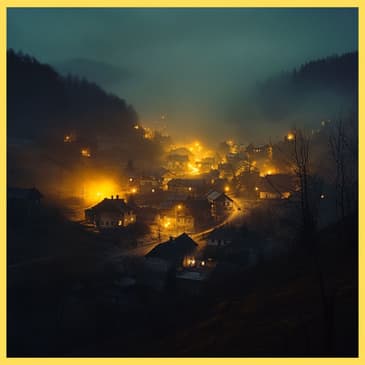
It's like looking at a sleeping animal across a spine of eastern Europe. It's thick with pine fog and stories that are too old to follow. Stretching over nine hundred miles, this mountain chain has watched empires fall and disappear. It is both a boundary between countries and also, some say between worlds, because their time seems to behave Strangely, there are villages you can only reach by foot or horse, Forests where compasses spin, places where cell phone signal vanishes, and so do people. Locals will tell you that it's the terrain, the wilderness, the weather, but they'll say it with unease, because these mountains, the Carpathians collect dark memories for centuries. The people who live there have spoken of shadows at walk without bodies, of fires that burn blue in the distance, of mountain spirits that appear as animals and leaf behind nothing but hoof prints and ash. So they'll tell you about the strigoy, the undead who rise from improperly buried graves, about hidden springs that curse anyone who drinks from them, and about places that aren't just haunted but alive. They're also not just legends for tourists like me. They're woven into everyday life, like farmers who leave out bread for spirits, or children who are taught not to whistle after dark. And even now in the twenty first century, there are grown men who will not climb certain peaks alone. So it's no surprise that Romania's witches come from here. The mountains protect them, and sometimes they say speak to them. Some were born with the gift and others inherited like blood. So while looking for stories about this vast area, of course I went with the witches, curious stories that are still making headlines to this day. My name is Edwin, and here's a horror story. You say that the wind moves through these mountains to show that it's breathing, bringing back the memory of something older than language, older than God. The villages tucked into these valleys whisper things they don't write down, and when the sun goes down behind the pine dark ridges, people still lock their doors just in case. Now, Romania might not be a country you usually think of when you hear witchcraft, but you might think of vampires. But here witchcraft is in fantasy. Here, witches are not relics. Of the past. They're very much alive. But to understand how that's possible, we have to start at the very beginning. But we won't go with broomsticks or fairy tales. Instead, we're gonna go with salt and blood, bone and fire. Long before Romania was Romania, the Dacians lived there, the mysterious people who built fortresses in the mountains and spoke of immortality as if it were a given. Their god, Xilomaxis, was a deity of both healing and death. They believe that death wasn't the end, just a gateway to another kind of life. The Greek historian Herodotus even wrote about them, baffled by how calmly they accepted death, convinced they could be reunited with their god. Now, this belief in the unseen what lies just best the edge of human senses never really left. When the Romans invaded, they brought roads, bats, and soldiers, but they couldn't kill the Dacian spirit. Pagan traditions quietly fused with early Christianity. Saints wore the faces of old mountain spirits. Rituals honoring the dead became a strange hybrid of incense, salt, circles and candle flames that they still burn today even now. In parts of Transylvania or Moldavia, you'll hear villagers talk about the ursiota, three women who appear at a baby's birth to spin its destiny. They aren't just folklore characters, though some families still hold ritual ceremonies to honor them. If they aren't respected, they're asking for bad luck. Then there's a strigoi, the restless dead. Now you may think of vampires, but strigoi are older and more feral. Not always blood drinkers, but spirits who refuse to rest. Some are blamed for illness, infertility, even storms. In certain villages, people still exuom corpses suspected of being strogoi. There are documented cases from as recently as their early two thousands, with police reports and forensic evidence to match it. So when we talk about witchcraft in Romania, we're not talking about the vague sense of magic. We're talking about something deeply woven into the structure of life itself, always there, between medicine and prayer, between history and nightmare. And yes, there are witches, real ones. Some are healers passing down urble knowledge from their grandmothers. They make teas and read prayers set to drive away bad spirits. Others cast spells for love, for revenge, for money. They burn photographs and chant and the old tongue, and people go to them, ordinary people, students, doctors, even politicians. But from what I found, this power doesn't come from spell books or tarot cards. From the land see the Carpathians. The mountains that told you about in the beginning have always been a boundary between empires, religions, and worlds, and even now, when you cross them, it feels like entering a different time, the place where the dead are never far from the living. It's a balance that survives centuries of change, like the Ottoman Empire, the Austro Hungarians, Communism, the modern EU, and through it all which has stayed quietly and carefully, practicing undercover and sometimes right out in the open. Today witchcraft in Romania is a thriving subculture. You understand why we need to look at how it came back into public view, how it came not just accepted but legal. And that story starts not in some medieval forests, but in a government office with a tax form and a curse. On January first, twenty eleven, something strange happened in Romania. A group of witches, real witches, stood in the freezing cold on the banks of the Danube River. They were tossing mandrac roots and dog hare into the churning water. They chanted ancient curses, called on spirits, and condemned the Romanian government. One of them even held up a clay pot filled with the river water and shouted, may their tongues dry and their lives turn to dust, and why well. For the first time in Romanian history, the government had officially recognized witchcraft as taxable labor. Witches were now expected to issue receipts, file income reports, pay social security. Some of them would even have to register with the Ministry of Finance, and the witches were furious, but not all of them, and that's where the story gets interesting. The witch leading the Riverside curse was Bratara Buza, an elder from a long line of practitioners. Her name had already become familiar to many Romanians. She had been arrested during the communist regime for her rituals and accused of manipulating people through superstition. After the Fall of Choosesku, she re emerged at something of a celebrity witch, known for her dramatic style, sharp tongue, and willingness to curse politicians on live TV. So when she heard the news that witches were going to be taxed just like any other worker, she saw disrespect. Others didn't agree, though, just outside Bucharest, another witch, Mihaela Minka, had a different reaction. She wasn't offended by the change, She was excited. She saw it as recognition, legitimacy. For her, this was proof that witchcraft was real labor. We work like anyone else, she told journalists. We have clients, we offer services. We just happened to work with spirits. And the media loved the drama. Obviously, one week they were interviewing witches about love spells, and the next they were reporting on spiritual warfare between rival covens. It was an industry, and of course there was a lot of money in it. A basic ritual costs around two hundred lay about fifty dollars, but for serious cases, breaking a curse, witting a court case, healing a sick child, those could run into the thousands. Some witches offered packages, complete with ongoing consultations and spiritual maintenance. Politicians were among the clients, business people, even a few celebrities. At least one parliamentary aid was caught forwarding messages from a witch about how to purify a political rivals energy. In twenty thirteen, the Locals election candidates was accused of hiring a witch one to influence the outcome of a runoff vote. Nothing was ever proven, but the belief that it might work was powerful enough to stick, and so Romania found itself in a strange position, trying to regulate something that officially isn't supposed to exist. The government's rationale was simple. If someone makes money from a service, even a supernatural one, they should pay taxes. Whether you're a fortune teller, a palm reader, or a spiritual healer, the law doesn't care how you work, only that you do. The deeper implications are harder to untangle, because what happens when a country that spent decades under communist apeism now has legal witches. Some of them have been investigated for fraud, and others have been taken to court by unhappy clients, some that claim that love spells didn't work and There are case is on public record where the judges had to decide whether a curse counted as psychological harm. Literally, it's what it sounds like, a courtroom where the argument isn't did this person steal from me, but instead did this person spiritually damage me? Here we are. Over the past decade, Romanian witches have continued to adapt. Some have now websites. They livestream rituals, they take PayPal. Even a few offer services in English for clients abroad, and despite the drama, many of them do pay taxes. But even within their own community, the divide remains. There are traditionalists, those who work from home, follow ancestral customs and they see the craft as sacred. Then there are the modern witches, entrepreneurial, media savvy and often controversial. Of course, they don't always get along. Some covens have publicly accused others of being Charlatans. There are rivalries, breakups, curs thrown between families, and twenty fourteen won such feud led police involvement after threats or exchanged when over a televised ritual gone wrong, And it's real documented. It's not like in the fairy tales. What happened in Romania is about a century's old craft learning to live within twenty first century bureaucracy. It was a paradox that feels uniquely Romanian. So what happens when these powers aren't just acknowledged but misused? So next we're going to look at some cases documented, public and eerie, where curses had consequences, not just stories, but real life tragedies tied to claims of witchcraft. It's easy to dismiss witchcraft as harmless, just old superstition, romanticized rituals, a bit of theater. That's until someone gets hurt. So let's go back again to twenty eleven, the year witches became taxpayers. A headlines spread through every Romanian news outlet like wildfire. Witches cursed the government over new tax law. At the center of it all was Pratara Buza, who I told her about just now, one of Romania's best known witches. The government announced the new taxes, she didn't just protest, she responded with the ritual on camera. She and several other witches gathered outside Bucharest through chicken and trails and a vial of pig blood into the river they called on spirits to bring ruin to the politicians who had, in their words, desecrated the craft. Three weeks later, a member of parliament suffered a sudden heart attack. The witches claimed responsibility. Was it a coincidence? Stress? Maybe just bad timing? Maybe, but you couldn't tell that to the people who started whispering. Don't anger the witches. This wasn't the only time fear made the headlines. In twenty thirteen, during a tense race for mayor in a small town outside Lossie, a bizarre accusation made national news. One candidate publicly accused his opponent of hiring a witch to sabotage him during the campaign. It wasn't just gossip. He brought what he claimed were payment records, screenshots of messages, and even a text allegedly from the witch herself saying the ritual is done, he will be weak in debate, The accused candidate denied it, said that he never spoken to such a witch, never believed in that sort of thing, but the timing was odd. Just days after the supposed ritual, he stumbled badly during a televised debate forgot key policies, freezing mid sentence voters noticed, and he lost the election. Weeks later, the witch at the center of it all gave a quiet interview to a local tabloid. She didn't name names, but she did it had confirmed that she'd been paid to perform a ritual during that race, and when asked whether it worked, she smiled and said, you saw the results, didn't you. Which side was she on? Was a coincidence, sabotage, psychological warfare, or just a man undone by the idea that someone had cursed him Again, no proof, no smoking wand but in the country where the line between belief and reality is kind of thin, it was enough to shake people. Then came the case of the Popescu family, a middle class household in Dulge County and twenty twenty other story appeared multiple Romanian papers, including ade Varul and Libertatia. It started when her youngest daughter got sick. Nothing too strange at first, fatigue fever, but then she stopped speaking, She wouldn't eat, slept all day, and woke up screaming. Doctors couldn't find anything physically wrong, and then the animals started dying, first the chickens and the goat, and finally their dog. The family brought in a priest, and she refused to enter the house, said that something wasn't right. That night, the mother swore she saw a shadow standing by the girl's bed, watching and breathing. Neighbors whispered about a curse, and eventually the family contacted a witch, and not just any witch, but one known for curse reversals. The ritual was performed in secret. According to the mother, her daughter began to recover within three days. Again, no medical paper will prove that, but there is a hospital file, and you can speak to the priest, who to this day refuses to stab foot on that property. That place, he said to reporters, has been touched. Of course, not every story ends with healing. Some simply don't end. There's a two thousand and six case in Shuchava County where a woman filed the police report accusing her neighbor of cursing her crops and causing her miscarriage. She claimed she had seen her neighbor bearing chicken bones at the edge of her garden. Three weeks later, her entire cornfield turned black, and a few days after that she lost her pregnancy. The neighbor admitted to the ritual, not out of malice, she said, but because she had been wronged. She was fined for trespassing and nothing else came of it, but locals still avoid both women. It's the silence that lingers in these places. You can feel it when you walk into certain villages, attention that sits in the air. You'll hear stories told in low voices about women who know things and men who died in their sleep after a fight one that they shouldn't have picked. Now are these stories real? Doctors in Romania have actually documented cases of witchcraft related anxiety, her real psychological condition, brought on by fear of being hext and in that fear, the curse becomes real. In most parts of the world, when someone starts speaking in a voice that isn't theirs or convulsive without warning, or says that they're being watched by something no one else can see, we might send them to a hospital. But in parts of Romania they sometimes send a priest or a witch. So let's start with the case that shook the entire country, the Tanaku exorcism. It's a name that still triggers discomfort in Romanian media because it's not just folklore it's tragic, real, and it's documented in court transcripts, news footage, and film adaptations. One of them is called Beyond the Hills. I actually mentioned it in a previous episode called Death by Exorcism. In case you didn't listen to it yet, here's a short version of it. Right In twenty and five, a twenty three year old woman named Irina Carnici arrived at the Tanaku Monastery in northeastern world Mania. She had a history of mental health issues, including schizophrenia, but the nuns there believed that something else was at work. They said that she wasn't just sick, but she was possessed, and over the next several days, the priest and four nuns performed what they called a ritual of liberation that bound her to a wooden cross. They gagged her, denied her food and water for three days. On the third day, she died. The priests claimed that they were trying to drive out the devil, and the court called it manslaughter. It's a case that exposes the blurred line between religious belief, mental illness, and old world's spiritual fear, and it left a lasting scar not just on the church but on the country's collective sense of what's possible, because even after the trial, even after the scandal, there are people in Tanako who still believe that the priest was right, that Arena wasn't suffering, that she was inhabited. Possession, demonic or otherwise is still taken seriously. In parts of Romania. The Orthodox Church quietly conducts exorcisms each year, especially in rural regions where medicine and magic still compete for trust. But sometimes it's not just the church at they call first. In twenty twenty two, a family near Baragon Plane reached out to a local television station in desperation. They believed that their daughter was under a curse, that something had entered their home. According to the family, it started with sleep walking. The girl, just eleven years old, would get up in the middle of the night, stare into the dark corner of the room and speaking of voice. None of them recognized it was a Romanian, it was in any language that they knew. And then came the cold spots, the smell of sulfur, the lights flickering off when she entered a room. Eventually, her mother said that she woke up to find claw marks across her daughter's back, no blood, just red lines as scratched by an invisible hand. Doctors found nothing wrong the rantestes. They sent her to a child psychologist, but nothing, so the family turned to her Vrajitoire, a witch known for breaking spiritual bindings, and the ritual involved salt, holy water in a charred poppy seed. It was performed at midnight under a waning moon, and that night the girl slept soundly for the first time in weeks. The next morning, the claw marks were gone. You can believe it or not, but the family filed the statement with the police. During the height of the haunting, the television crew captured some of the ritual In the footage, though grainy shows a child who is clearly terrified. Whether firm possession or suggestion, we may never know, but the unease that was real. And then there's a case of the cursed mirror. This one was very interesting. There's a story that dates back to the nineteen eighties but resurfaced recently when the object appeared on an auction site. According to local legend, the mirror was passed down through a family in Braschov County. It was said to reflect not just your image but your secrets. People claimed that they saw flashes of events they had never told anyone about, arguments, betrayals, hidden affairs. One woman, in a sworn statement, said that after gazing into it for too long, she heard someone whisper her name from the other side, and she lived alone. Over the years, every family member who owned the mirror reportedly suffered strange accidents. One fell down a flight of stairs, another developed a sudden skin condition. A child went blind in one eye with no clear cause. Eventually they locked a mirror in a shed. And yet when the last family member died in twenty eighteen, the mirror was sold. It surfaced briefly on eBay and then vanished. No one knows where it is now. Haunted objects, possessed children, sudden illness with no diagnosis. Well, these aren't just ghost stories whispered around a fire anymore. They're filed into police reports, documented by news crews, discussed by priests, and which is alike? And while skeptics will point to psychology and they may be right, what's undeniable is the fear. Because fear is a kind of possession. It lives in your bones. It changes how you sleep, how you think, how you see the world in Romania, that fear has a name. It's called the Strigoi, the moroi, the umbra, the shadow. And whether these things are real in the way scigns demands, or real in the way belief makes them, they are very much alive here in the Carpathians, where the karapati as are pronounced in romains. So now we're back in the mountains. And even if you don't believe in magic, even if you laugh at curses and scoff at haunted mirrors, there's something about these mountains that makes people lower their voices. Not just the landscape though that helps, the fog, the cold, the villages that seem carved into another century. But it's the silence too, the waiting, the sense that something else is watching. And maybe that's the real power of Romanian witchcraft, not the spells or the rituals, but the way it shapes the space between what we can explain and what we can't. Today's witches also post on Instagram the live stream rituals. They offer spiritual services to tech workers, inclusion fashion designers in Bucharest. They accept payment by bank transfer. They keep paper trails just like lawyers and therapists. Some are legitimate spiritual workers, others are opportunists. But the people who go to them, they're not uneducated or gullible. They're engineers, nurses, students, business owners. They're just human. There was a quote that popped up by a man in his late thirties, tech savvy, urban logical. He didn't want his name used, but he said something interesting, and I want you to think about it. He said, I don't really believe in witches, but I believe in intention. And when someone performs a ritual for you, burn something, says words, focuses energy, it feels like someone is helping, like they see you. Then he paused and added, sometimes that's enough. Vermania has changed, obviously. It's part of the EU and has one of the fastest Internet speeds in the world. Young people speak three languages, build apps, vote, travel and dream. But even now, and especially now, the old belief survive because trauma also lived there, repression, ghosts, and for forty years under communism, people weren't allowed to believe in much of anything. The Church was weakened, foll traditions were pushed underground. Talking about witches could have landed you in prison. But now belief is coming back, and with it all the things that were forced since the dark, the rituals, the warnings, the whispered names. You'll still find children being bathed in salt water to remove the evil eye. You'll still hear about women who can tie the womb, a spiritual form of birth control, And if a child becomes suddenly sick or violent or quiet, someone will suggest you consult Rajiotari just in case. Belief isn't always about facts. It's about thresholds. It's about what we turn to when the lights go out, when the baby won't stop crying, when the land grows cold, the medicine doesn't work, when the voice in the hallway says your name and you know you're alone. It's also about the rituals we build to protect ourselves, about the shadows we still believe in, even when we don't want to admit it out loud. This episode of Horror Story was written and produced by me Edwin Karubiaz. I found it very interesting to know how there are similar cultures that are intertwined with witchcraft and believe such as my own, and I want to thank Max Moons and give a shout out to all listeners from Romania. I know you guys have stories, so feel free to update me, comment or submit corrections and thoughts. We're now officially in the charts with this podcast, and it's all because you've tapped the follow button, commented, and dropped five stars for me in the reviews. Anyway, you know the drill. If you're following the show, I'll reappear next week right here to tell you another story. Thank you very much for listening. Keep it scary everyone, See you soon.