
You can find Edwin social media as @edwincov
Have an idea you want to send? Send me an email or DM! hello@horrorstory.com
You can get these ad-free through ScaryPlus.com free for 14 days, then 4.99 per month. Cancel anytime.
Get in touch on HorrorStory.com
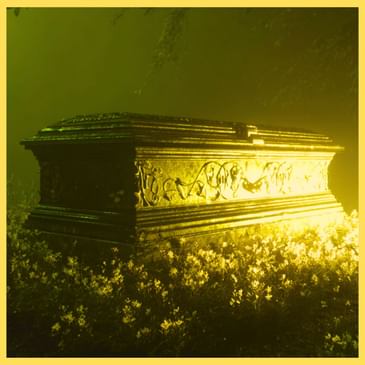
Back in the eighteenth and nineteenth centuries, tuberculosis was everywhere in New England, but people didn't call it that. They called it consumption, and the name kind of fit now. It looked like something was consuming you from the inside out. It started with a cough and then a fever, and then over time your body would start wasting away. Your face would get pale or maybe completely flushed, weight would drop, eyes would sink deep into the sockets, and the coughing sometimes brought up blood. Now, for the people living back in that era, it looked like someone or something was draining the life out of their loved ones. Times were different, though there wasn't much understanding of what was really happening. Germ theory, for example, didn't exist yet, and doctors couldn't explain why so many people in the same family were dying one after the other, often within just a few months. When your mother died of consumption, and then a sister followed, and now your brother was coughing blood, it kind of felt like a curse. In some towns, especially the smaller, more isolated ones, people thought that something, maybe someone will still hanging around after death, feeding on the living, because he would bury someone, and then the next family member would get sick, and then another. It just felt like the dead were not staying dead. All of these beliefs would eventually lead to an unsettling account of one person in particular, who was thought to be a vampire because when they looked at her corpse, she still appeared to be alive. This is the well documented tragedy of Mercy Brown. My name is Edwin, and here's a horror story. Because there were no real answers, especially in rural communities far from medical knowledge or resources, people turned to what they did, no folk beliefs, old stories, and rituals passed down by word of mouth. Now these weren't exactly places dominated by churches or strict doctrine. A lot of New England at the time was unchurched, with people mixing Christian ideas with folk remedies, superstition, and a little occult thinking. Tuberculosis was terrifying, and it created the perfect conditions for fear to turn into something supernatural. When science couldn't offer solutions, belief would step in and that's where the idea of vampires, or more accurately, the undead, started to take hold in New England. But I'm not talking about the legend creatures from Europe. Now. These were something quieter and more personal. A dead loved one who, for reasons no one could fully understand, hadn't found on peace, and until that connection was broken, they believed that the living would keep dying because of it. Today you might look up these cases by typing in vampire in a Google search, but people in New England didn't usually use the word vampire back then. That was more of an outside label used later by newspapers or curious writers. People from within those towns would say things like someone was not at rest, or that the dead were somehow still tied to the living. It wasn't always clear what exactly they thought was happening, but the general idea was that a deceased person, especially one that had died of consumption, might still be lingering in some in between state. If someone in the family started getting sick afterward, it meant that the connection had not been broken. What they would do in response to this belief was pretty serious. If enough people in a family died or or someone else started showing signs, especially the kind of slow, drawn out illness consumption caused neighbors would get involved. Sometimes entire communities would come together and they would dig up the bodies of the recently deceased. They would head out to the cemeteries determined to find signs that they were still alive. And no, they weren't looking for open eyes or someone climbing out of a coffin. What they were checking for were specific signs a body that hadn't decomposed the way that they expected, skin that looked fresh, or blood still present in the organs, especially in the heart. All of these things they thought pointing to someone who wasn't truly dead. Now today we know that bodies buried in the winter and cold ground can stay preserved for quite a while, but at the time, if someone who had been buried for weeks or months and still looked alive, it could be terrifying. People described things like flushed cheeks, soft skin, even what they thought was breath escaping from the nose, and that was enough to convince them that they found the cause of the sickness. What came next was a little more disturbing. If they believed that the person was feeding on their family after death, they might cut out the heart and liver, and burn them. The smoke they believed would break the connection, and in some cases the ashes were mixed with water and given to the sick relative to drink as kind of a remedy that sounds really weird and gruesome now, but it was seen as the last resort, a desperate act from people who had no other way to fight what was happening to them. These rituals were concentrated in rural parts of Rhode Island, eastern Connecticut, Vermont, and a few other corners of New England, places that were far enough away from outside influence enough that they developed their own explanations and ways of dealing with fear. Now, these were part of a larger belief system that tried to explain what science couldn't. When someone you loved was wasting away and doctors couldn't help, all the people around you believed it might be the dead causing it. It was hard not to go along with it, especially if you thought it might save someone else. That belief alone, while it might sound strange now, made sense to the people back then. But how long exactly we're talking about here? When did this happen? Now? I realized I hadn't mentioned it just yet. But we're in the late eighteen hundreds, and for now, in this part of the story, i'll tell you about the small town of Exeter. We're in Rhode Island now, where the Brown family had already lost some family members, more than most, actually. George Brown's wife Mary Elisa was the first. She died in eighteen eighty three after a long fight with consumption. Just a year later, their eldest daughter, Mary Olive, also died from it. That left George with several children still at home, including Mercy Leina Brown and his only son Edwin. He started showing signs of illness a few years later. It didn't come all at once. He had nightmares, terrible dreams of suffocating, and gradually became weaker. The coughing and weight loss followed the same pattern that had taken his mother and sister. Hoping for a cure, George sent Edwin to Colorado Springs in eighteen ninety one, the place people thought that might help with lung disease because of its dry air, but it didn't work. Edwin came home worse than before. Around the same time, Mercy Leina got sick as well. She declined rapidly, though. It was what doctors called galloping consumption, a fast moving form of tuberculosis that could kill in weeks. On January seventeenth, eighteen ninety two, Mercy died at just nineteen years old. Because the ground was frozen, her body wasn't buried right away. It was placed in the family's above ground crypt at Chestnut Hill Cemetery. By the time Edwin came back and began to get worse, the neighbors were convinced that something was wrong. People around George started talking. Too many members of his family had already died one after another. It was too much for it to be a coincidence or normal illness. They believed that one of the brown women wasn't resting peacefully and was draining Edwin's life, and I believe was strong enough that they urged George to let them do something about it. George didn't believe in the vampire theory, but he had watched nearly his entire family die and his son looked like he would be next. So, whether it was out of desperation, pressure from his neighbors, or just a desire to feel like he had tried everything, he gave his permission. The day they opened Mercy's tomb was cold and the ground was still hard from winter. Was March seventeenth, eighteen ninety two. She hadn't been buried underground like the others since January, waiting for the weather to change, and that fact, more than anything else, is probably why she looked the way that she did. But at the time none of that mattered. When they lifted the lid off the stone vault and saw her, people were shaken. Her body wasn't decayed like Mary Elisa's or Mary Olives. Her face still had color, her skin hadn't stiffened completely. And when they cut her open, yeah they actually did that. They found blood dark and clotted, but still there in her heart. For the people standing there, it was the final piece of proof Mercy was not at rest. They had I had an official medical examiner there, doctor Harold Metcalf, but he didn't believe any of it. He said the signs that they saw were exactly what he expected from a body that had been in cold conditions. But he also knew his opinion wasn't going to stop what was happening. George Brown had reluctantly agreed to the exhumation, and the rest of the group had already made up their minds. They believed that they had found a source of Edwin's illness. So they got to work, and once the organs were removed, they built a fire right there in the cemetery. Mercy's heart and liver were placed on the flames and burned until they were reduced to ash. Some accounts say that the ashes were gathered into a container mixed with water and given to Edwin that same day. And it wasn't some symbolic gesture. They genuinely believed that this mixture, what it called a bitter draft, could cure him. Edwin didn't fight it. He drank the mixture, just like people hoped that he would, but it didn't save him. He died less than two months later. The whole thing might have faded into local memory if it hadn't been for the newspapers. The Providence Journal published the story immediately, calling it testing a horrible superstition in the town of Exeter. Then a follow up editorial was even harsher, warning that this kind of thinking was dangerous to civilization itself. Other papers picked it up, and soon the story was being talked about far beyond Rhode Island. The term vampire was used more freely now, not by townspeople but by journalists trying to explain what had happened, and Mercy Brown, a quiet young woman from a small town, was suddenly being written about like she was something more than just another victim of disease. Her name, her story, the image of her heart being burned to save her brother. It all caught on in a way that no one in Exeter could have expected, and while Edwin's death confirmed that the ritual had failed, it didn't stop the story from growing. By the time Mercy Brown's story made headlines, things were already starting to change. Not overnight and not everywhere, but the old explanations were losing ground. Ten years earlier, in eighteen eighty two, a German scientist named Robert Koch had discovered the actual cause of tuberculosis. It was a turning point. German theory was slowly becoming accepted, and people were beginning to understand that disease spread through invisible micro organisms, not through the influence of the dead. But still news traveled slowly in rural parts of New England. In places like Exeter, folk beliefs didn't disappear just because a scientist across the ocean had made a discovery, And for many people, those old traditions were still more familiar and more comfort than what modern medicine had to offer. You couldn't see a bacterium, but you could look at the faces of the people you'd buried and wonder if one of them was still somehow connected to the sick among you. Mercy's case ended up symbolizing that shift where old ways met new knowledge. Newspapers and cities called it a superstition, something out of step with modern thinking. They would use words like ignorance and barbaric to them. The exhumation and exeter was left over peace of the past, a kind of medieval thinking that had no place in the modern world. And in some ways they were right, But it also missed a reality of life in those small rural towns, where families were isolated and desperate, and where science hadn't yet answered most of their urgent questions. Other things helped bring the panic to an end as well. Embalming was becoming more common, especially after the Civil War. Families wanted the bodies of the fallen soldiers brought home for burial. The chemicals used in embalming changed the way that corpse is decomposed. With blood drained from the body and organs treated or removed, there was less chance of finding signs like liquid blood or preserved tissue, things that had been once interpreted as signs of the undead. Over time, science and medicine changed the rituals around death. The body, once feared as a possible threat was now something to be preserved, clinged, displayed. Hospitals and funeral homes replaced a role that neighbors and family had once filled. That shift, combined with medical advances and new public health efforts, meant that the old fears gradually faded. People still got sick, but they didn't dig up their relatives to stop it a Mercy Brown's case was one of the last widely known incidents of this kind. After eighteen nine two, you don't see many more exhumations like hers in the records. The vampire panic, as it came to be known, started to quiet down. Mercy Brown never really disappeared to a lot of people. She became the face of an era when fear and belief pushed people to do things They never would have considered under normal circumstances. Writers actually started picking up the story not long after it happened. One of them was Bram Stoker. He never mentioned Mercy by name, but it's widely believed that he read about her case while researching for his novel Dracula, which was published in eighteen ninety seven. The character Lucy Westenra, a young woman who dies of a wasting illness and is later exhumed to destroy by her friends because they believe she's a vampire, bears a strong resemblance to Mercy, and whether or not Stoker directly based Lucy on her, the similarities are hard to ignore. P Lovecraft, another writer from Providence, referenced the incidents more openly in his story The Shunt House. He described an old house and Rhode Island haunted by a mysterious force connected to a woman who died of consumption. Lovecraft was fascinated by local legends, and Mercy's story fit right into the kind of eerie, real world horror he liked to explore. Mercy's grave still draws visitors. He's a simple headstone and Chestnut Hill Cemetery not far from where he heart was burned, people leave coins, flowers, and notes. Some just come out of curiosity, Others seem to feel a connection to the story. The mix of tragedy, fear, and something still unresolved, she's become a kind of local legend, and unlike most, it wasn't because of what she did in life, but because of what others believed about her after death. Mercy was just a teenager who got sick during an epidemic that had already taken most of her family. The decisions made after her death weren't hers. They came from a community that was scared, grieving, and desperate to stop the spread of a disease they didn't understand. What happened to her was about fear and what fear can do when people don't have answers. The story reminds us that folklore often comes from pain, from uncertainty, and from the human need to find meaning in the middle of suffering. This episode of Horror Story was researched and produced by me Edwin Kowarubias. Thanks for the ideas you've sent to my email. I've actually encouraged these for future episodes already, so just keep an eye out for those. But anyway, if you're subscribed to this podcast, I'll be back next week with another story. Thank you so much, by the way, for all your support and for our members. Huge shout out to our Scary Plus supporters. That's all for now, Thank you very much for listening. Keep it Scary everyone, See you soon.