
You can get these ad-free through ScaryPlus.com free for 14 days, then 4.99 per month. Cancel anytime.
Find out more about Horror Story on HorrorStory.com
Join our community:
Youtube.com/scarystorypodcast
Facebook.com/scarypod
Instagram.com/scarypod
Visit and join our newsletter for more:
Scary.fm
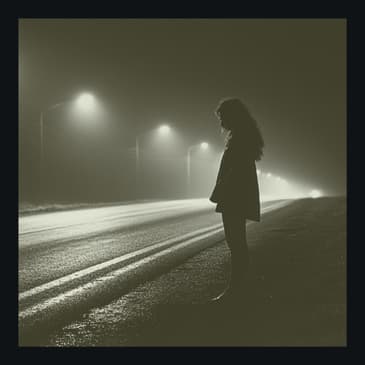
It's rare to see hitchhikers around California today, although up in the northern parts near San Jose and Sacramento, I've actually seen a lone backpacker with her thumb up on the side of the road asking for a ride. But if we stepped back to the nineteen sixties and seventies in the United States, the culture was leaning more toward an idea among people to be more cooperative and spontaneous. Plus, there was an easy way to get around for teenagers or college students without a car. The choice between connecting with a stranger or taking a boring bus ride was an easy one to make, although of course nothing was one hundred percent safe. Even back then, the concerns were the same as they are now safety especially for young women, and the newspapers were no stranger to these types of reports. It would go into graphic detail of how assaulted dead bodies of victims had been found along the side of the road. For a time, between nineteen seventy two and nineteen seventy three, a series of events took place in the North Bay area of California that even reporters struggled to keep up with. The mysterious deaths of young women in Sonoma County in Santa Rosa, all of them hitchhikers. My name is Edwin, and here's a horror story. The night was just like any other at the Redwood Empire Ice Arena, the place where locals would go ice skating, hang out with friends, and meet other people. If we search for it now, you'll still find it by its more popular name Snoopy's Home Ice. Because it was owned by Charles Schultz, the creator of Peanuts, the comic strip. It was a popular place for young teenagers and one of the few for them to hang out in. Such was a case for Marine Louise Sterling twelve years old, and Yvonne Lisa Weber, thirteen. It was February fourth, nineteen seventy two, and they had been dropped off by one of their mothers at around seven or eight in the evening. Marine and Yvonne left the ice skating rink, though they went from the ice arena toward Gerneville Road just outside and got in a car. At around eleven PM, one of their mothers went back to pick them up. She went inside Snoopy's Home Ice searched around for a bit, but couldn't find them. She asked around but could find little information on the whereabouts. When she called the other girl's mom, she started to suspect that something was wrong. They hadn't gotten home. She quickly called the homes of her other friends and they all said the same things. They had not seen the pair of girls, and so she called the police to report the girls missing. The police started investigating, assuming that the two girls were just runaways. It wasn't particularly uncommon for young teens to display their independence like that. Despite those assumptions, the police did come up with some information. According to witnesses and acquaintances of the two friends, there had been a young guy either eighteen or nineteen, maybe early twenties, wearing a denim jacket and dark hair that had been watching the skaters on the ice that night. Later accounts of that night started to surface, with some saying they had been spotted at a bowling alley. Another version says that they had actually left with that guy with the denham jacket who had offered them to go smoke marijuana with him. Some say they have refused. Another story says they accepted, but it didn't take too long for the police to change their minds and say that maybe these girls had not run away. And that was because just a month later, on March fifth, nineteen seventy two, and still within this area of northern California, a body was found in an embankment near Bennett Valley Road. It was a young woman, but it wasn't either of these girls. In fact, it would be three days after Christmas when the skeletal remains of Marine and Yvonne were found, some thirty miles away from where they had last been seen back in February. Marine's mother would be the one to identify an ear ring, a set of orange beads, and a gold cross that her daughter used to wear. It was a Saturday on March fourth, nineteen seventy two, and Kim Allen, nineteen years old, was out with her friends in San Francisco in the morning. Kim needed to get to work before noon, and so they said they're goodbyes, and she went out toward the road to hitchhike down to Larkspur. It wasn't anything unusual for Kim. She was a trusting person. She got there before her shift at a health food store and waited for her five hour shift to begin. She got her work done and then went back out to the road to hitchhike back to Santa Rosa, where she lived. As she was waiting a car with two men inside, they told her that they were heading up north toward San Raphael. It was only a few miles off, but Kimp thought that it might be easier to get a ride to Santa Rosa from there instead of from Larkspur, so she agreed and hopped on. She was dropped off along Bell Avenue, where she could easily get on the proper side of the one to one freeway and then make her way up toward Santa Rosa. Dozens of drivers would see her on the side of the road until unfortunately someone picked her up. At two pm the next day, a Sunday, just twenty feet away from Enterprise Road, two teenagers out riding motorcycles found her body. She was found tied up, nude, faced down on a steep embankment, sexually assaulted, and apparently she had been tossed and rolled all the way down. On Thursday of that same week, the roommates reached down to the police and saw the body, saying that it was their missing roommate, but it was Kim's sister who officially identified her. The next day. The search for a killer was on and they had a couple of ideas I would say suspects, but really the police had very few parts of the story to go off of, and the weeks that followed, several clues started popping up, things like the orange backpack she had was found. Weeks after she died. Her checkbook was dropped off at a mile dropbox of a post office in Kentfield, California, some forty miles away from where she was found. One of Kim's teachers, Elizabeth Barr, was interviewed for the local newspaper and through it and the database of articles on Santa Rosa hitchhiker murders dot com, I found out that she had experienced a loss of two of her students in the two years that she was teaching over at Santa Rosa Junior College. She was always worried for Kim, begging her to stop hitchhiking and even asking for rides for her by her own student, and after Kim's death, Elizabeth lived with the haunting what ifs, wondering how she could have tried harder to convince her to reconsider getting to her job hitching rides. But perhaps even more painful was the experience of her mother, who, on an interview with the Oakland Tribune, said that she was feeling a little better, letting time do its thing, but then she saw a girl hitchhiking on the side of the road and lost it. Her mind flooded with thoughts of her daughter. She was never a speck of trouble to anyone from the day she came on this earth, she said of her daughter. She trusted everyone, believed that people were good. Laurie Lee Cursa was with her mother at a U Save grocery store on November eleventh, nineteen seventy two, when Laurie suddenly left. When I was looking up this story, I thought it was odd to accept that your daughter simply leaves, considering she was thirteen years old. But the thing about Laurie was that she had gained a reputation for being a runaway, constantly looking for ways to get away from home. She would often go away for several days with friends and then come back. She was also a hitchhiker. Again, note she was only thirteen, but even at that age. After I researched a bit, I found out that she had already experienced more pain than most of us have ever had to deal with. Her father had left her and her mother, and the effects of that and her perspective in life would come through in her behavior. The day she left, her mother reported her missing, and was then roaming at the surrounding areas with her friends. She was last seen with them on November twentieth, although someone had actually seen Laurie hitchhiking that same day. On December fourteenth of that same year, Laurie's body was found naked along Callestoga Road, northeast of Rincon Valley. She had suffered a broke neck, but had no other signs of an attack. Investigators suspected that she jumped off a moving vehicle and was unable to move to her fall and died from exposure, since it was particularly cold that winter. When she was found, she was wearing her two hooped earrings, but they were missing some parts, suspecting that the killer had a certain inclination to take a small piece of jewelry from his victims. Now, you also probably spotted some patterns about these deaths, but here they are just in case. The most obvious is that they all happened just outside of Santa Rosa, California. All of them were missing their clothes and left near rural roads, the missing jewelry, and they were all hitchhikers. And that's how the investigation was pursued as the four deaths of these young women to be connected, and with the start of the new year in nineteen seventy three, the investigation was yet to find out suspect and the evidence to convict them. The tension of finding a murderer on the loose was beginning to fade. Finally, the warnings against hitchhiking were still around, but generally the community was on its way to recovery. And that's when another body was found. Even worse, the body of this young woman was not more than five feet away from her marine and Yvonne had been found the previous year. The story continues develop being read after this still with us. It was February of nineteen seventy three in the town of Anderson in Shasta County, California, and fifteen year old Carolyn Nadine Davis was getting ready to go to her classes at Anderson High School. When she didn't arrive home that evening, her parents filed the missing person's report. News articles about this talked about Carolyn saying that she was a traveler at heart and wanted to see the world. You'd still find those articles that she wanted to hitchhike around the United States. The truth was more complicated than that. Carolyn had instead gone to Garberville, where her grandmother and Carolyn's pregnant sister, Judy lived. She wasn't running away from home because she was trying to be independent, but rather she had witnessed a double homicide and was worried that the killers were going to go after her, and so Judy was not quite believing the story, but only seeing Carolyn's fear, like for example, she refused to sleep in the guest room and instead made her bed inside the closet in her sister's room. She didn't want to go back to Anderson, so instead, to make her parents believe that she was on her way south, she would write letters and give them to friends that were heading south and ask them to mail the letters to her mother, like one of them, for example, postmarked from Solidad, California. But the more Carolyn spent in Garberville, the more paranoid she became, and so she decided to leave and hitchhike to Illinois, writing to her sister Judy along the way. That's when she found out that Judy's baby was due to arrive soon, and so she made her way back. She met her niece and wanted to head back out as soon as possible. Judy begged her not to go, but eventually her grandma drove Carolyn out to the Garberville post office on July fifteenth. Caroline was going to start from there, getting ready to visit friends down south before heading out to Illinois again, but it would be the last time that she was seen alive. On July thirty first of nineteen seventy three, a motorcyclist driving along Frans Valley Road was able to smell a distinct odor and call the police. When they arrived to the rural forested area, they found the body of a young woman, nude, lying face down, less than five feet away from where Marine and Yvonne, the girls from the ice Drink, had been found, and about twenty feet from a steep embankment. At first, nobody knew who she was. No one had come forward to try and help, as it was far too difficult to identify the body by simply looking at her face. The facial features were too deteriorated. The press releases were asking for anyone with information to come forth, and eventually the news reached Carolyne's family. They hadn't heard from her in so long, not even her sister that would usually get a call from her every two or three days to let her know where she was. The grandmother insisted for Judy to call the investigators, and so she did. The simplest way to have her identified would be through dental records, which Judy provided, and unfortunately they matched the body. It took some time, but eventually investigators found the cause of death to be STRYC nine poisoning. This was different from the other murders, but still they were thought to be linked with the previous cases of the murdered hitchhikers. Teresa Smith Walsh was twenty three years old when she left her husband and decided to start hitchhiking along California. She had been staying with some friends just a little before December twenty second, nineteen seventy three, at Zuma Beach in southern California. She has said to a few of them that she was going to head up north to Garberville to spend Christmas with her family. However, Teresa never arrived. She was reported missing on December thirty first, nineteen seventy three, but unfortunately, in rural Sonoma County, just north of Santa Rosa, in mark West Creek, a body was found just three days before, on December twenty eighth, nineteen seventy three, matching the dental records of Teresa. She was found without her clothes, bound at her wrists and ankles, but bound in such a way that can't be described any other way but tortuous. She was found underneath a log, her body not completely underwater. The police could not figure out if she had been dumped there or at another part of the creek, which included another place near Calstoga Road, where Lori Lee Cursa had been found the previous year. If we take a step back to spring of nineteen seventy two, we end up at possibly one of the first witness accounts of a potential murderer. On April twenty fifth, nineteen seventy two, Jeanette Camachelle, who was twenty years old, went off to school in the morning, but when she didn't come back, her roommate, Nora Morales, reported her missing that evening. What made this different was that this couldn't have been a case of a runaway teenager. Jeanette was an adult, had no reason to leave a person that already knew Jeanette saw her near the on ramp to Highway one oh one, not unusual of her because that's where she would stand when trying to head up to Santa Rosa. The friend was about to stop to pick her up, and that's when another truck pulled up instead. It was a pickup truck about a ninth eighteen fifties model with a faded, brown, homemade wooden camper on it. The person driving it was described as a young white male between twenty and thirty years old, with brown hair styled kind of like an afro and a thick beard. Unfortunately, that's all the information that was gathered at the time, and for over fifty years, nobody knows of her whereabouts. There were several other cases of young women found in Northern California around the San Francisco area that may or may not be related. To the Santa Rosa hitchhiker murders. And even though some of these cases are still being investigated today by true crime reporters and researchers, with people claiming that even more information is surfacing, over five decades later, the cases are still unsolved. So Noma County sent out warnings against hitch hiking due to the ongoing murders, encouraging people to instead opt for carpooling for safe right shares. And yet the young spirits of those who called for adventure was too strong. It would lure them to experience a world where the majority discover that there is more good than evil in the world, that the media over exaggerates the negative. And it's true for each of the stories I have told you about today, there are hundreds of thousands of individuals who gathered lifelong memories, love stories, and friendships through hitch hiking. And even though it's not as common around these areas of California as much as it used to be, you can still spot them a part of our culture, a display of independence, and it's completely unfair for us to drive by and see them on the side of the road with those lingering thoughts that maybe if we pick them up, you might be saving their lives. This episode was researched and written by me Edwin Kovarubias. Special thank you to the interview work by Lisa Music and Michael Wellan for a deep dive into the investigation, and through the Unresolved podcast. For at free versions of this show and all the podcasts by SCARYFM, find us over at scaryplus dot com. Our other show, Murders, has merged with this one to keep everything in one place, and we're still going to stick with the horror paranormal topics based on your emails and messages. Still real and still scary. You can also find me on Instagram and TikTok. I'm at Edwin cod That's e d wi nco V. I'll link to everything in the description of this episode. Anyway, keep it scary everyone, It's you soon