
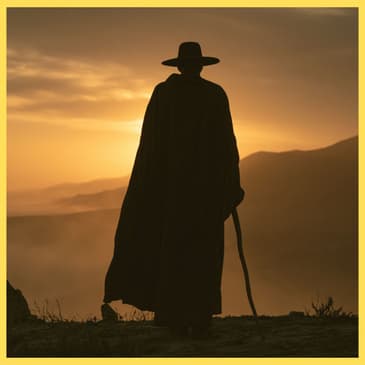
Witnesses describe them the same way: tall men, wearing capes or cloaks, with a walking stick by its side, and wide a wide-brimmed hat. In fact, the Spanish colonizers also saw them, calling them "Los vigilantes oscuros", the Dark Watchers. We'll take a look at the legends and verify the information that circulates about these beings making themselves known for 13,000 years.
We end the story with true terrifying accounts from credible people who have spotted them. Who, or what, could they be?
Episode by Edwin Covarrubias for Scary FM. Check out our shows on ScaryFM.com
Find Edwin on Instagram, Facebook, and Tiktok as @edwincov
HorrorStory.com
If you have ever driven on California's Highway 1, you know exactly what I mean when I say it's better to be on the passenger seat. It's easily one of the most stunning drives on Earth, but it's also one of the most nerve-wracking. To your right, there's nothing but endless Pacific Ocean, crashing against wave-dashed cliffs hundreds of feet below. To your left, the mountains rise almost vertically, climbing straight into the sky. It feels less like a highway and more like a tightrope, strung along the literal edge of the continent. Most people make this drive for the gram, for the iconic concrete arch of Bixby Bridge, the pristine turquoise waters of McQuay Falls. But if you look away from the ocean for just a second, if you turn your head and look up at those towering peaks, you start to realize that this beautiful landscape has a much darker, much stranger side. Because for centuries, people have talked about strange beings that inhabit some of the Santa Lucia Mountains. Entities. that watch your every move. My name is Edwin, and here's a horror story. This range is massive. It stretches for about 105 miles, runs from Monterrey County in the north all the way down to San Luis Obispo County in the south. Geologically, these mountains are made up of hard granitic rock, part of what scientists call the Selenium Block. sharing the same ancient roots as the Sierra Nevada range. Right in the middle of all this is Cone Peak, which stands at the highest coastal peak in the lower 48 states, shooting straight out of the sea like a giant stone monument. And then there's the fog. Because these massive peaks are right next to the cold water of the Pacific, they act like a giant barrier for the marine layer. Thick, heavy moisture-laden fog rolls off into the ocean and gets trapped against steep west-facing walls. It coats the towering coast redwoods and the twisted Monterey pines in a damp, perpetual mist. Now, it's an environment that feels alive. It moves, and it's pretty atmospheric. So, of course, our eyes start to wonder. We start looking for these shadows. But in those shadows, something looks back. For over 300 years, travelers, hikers, and locals have reported seeing figures standing on the highest, most inaccessible ridges of these mountains. Call them the Dark Watchers, or as early Spanish settlers named them, Los Vigilantes Oscuros. Descriptions of these entities are pretty consistent. You see, if you happen to spot one, they say that you aren't looking at a blurry, half-formed shape. You instead look at this towering silhouette that stands anywhere from 7 to 10 feet tall. They're described as humanoid, but completely featureless, just flat and void-like shapes that seem to absorb the light around them. They're almost always seen wearing long, flowing black cloaks, capes, or heavy trench coats. And on their heads, they wear these wide-brimmed hats, sometimes described as looking like broad witches' hats. Sometimes they're holding a long wooden staff or a walking stick, and they stand like ancient guards, taking care of the peaks. But they don't hunt or stalk or growl, and they don't attack. In fact, they do absolutely nothing. They stand completely motionless, silhouetted against the sky, staring out toward the open sea or the far horizon. It's as if they're waiting for something or someone in a state of eternal, silent vigilance. They only appear during very specific times. Witnesses almost exclusively spot them during the golden hours. At that stage, that transition window of dawn and twilight. When the sun is low, the shadows are long, and right at that transition between day and night. Here's a real mystery. The vanishing phenomenon. You see, if you're hiking in the backcountry and you look up across a canyon and see one of these hatted figures standing there, your instinct is going to be to get a better look, right? At least from a safe distance. Maybe you take a step forward to close the distance. Maybe you wave your arms or you yell out to your hiking partners. But the second you show any interest, the second you blink and turn your head to call out, the figure's gone. It happens every time. They don't run away or duck behind a boulder. They dissolve into a fog or melt directly into the twilight shadows. They leave absolutely no trace of their existence. You won't find footprints in the dirt or campfires. There won't be any trash, physical evidence, or anything whatsoever. It actually makes you wonder if they were ever there. For three centuries, this has been the protocol of ridges. They watch us, but we are never under any circumstances, allowed to watch them back. So who are they? Are they ghosts of ancient protectors? Interdimensional travelers stepping through the seams of the mist? Or are they just our minds, playing tricks on us in the lonely spaces of the wilderness? To find out, we have to look back to the very beginning of the legend. I have to go back to a time before Highway 1 existed, when the only way through these peaks was a horse trail, and the mountains belong to the shadows of the Spanish frontier. If you talk to any local in Big Sur, or if you read any of the popular paperbacks on California ghost stories, you'll inevitably run into a very specific piece of history. The story goes that before the concrete of Highway 1 was poured, and long before the hikers with the nylon colorful backpack started walking the trails, California's earliest Spanish settlers, they were already looking at the ridges of the Santa Lucia Mountains. couldn't believe what they saw. So it's the late 1700s. The Spanish mission era is officially underway and sparked around 1771 under the direction of Padre Junipero Serra. Soldiers, missionaries, and Mexican ranchers are slowly carving trails through the relentless canyons, dense redwoods of the central coast. It's a quiet, intimidating wilderness. And as these settlers ride through the canyons at dusk, looking up at the high, sun-faded ridges of They see them, towering pitch black silhouettes standing perfectly still against the fading light. The Spaniards called them los vigilantes oscuros, the dark watchers. But to the Spanish settlers, these figures weren't actually monsters or demons to be feared. Instead, they drew a direct line back to their folklore of their homeland on the Iberian Peninsula. They saw them as a version of the duendes. Now, this is super interesting, and I've talked about them a couple times. In Spanish lore, duendes are traditional mountain spirits, shadowy, benevolent guardians of the wild. They're in cultivated places where they hang out. They silently oversee the progress of human settlements. There's something comforting, I guess, almost protective to this early way of seeing things. The watchers weren't there to hunt you. They were simply the ancient, silent caretakers of the range. They were keeping a watchful eye over the frontier. Now, as the years rolled on and the United States expanded west, annexing California after the Mexican-American War, these Spanish oral legends slowly drifted into the background. But the settlers' feeling of being watched never actually went away. And as writers and folklorists of the 20th century began digging into the mystery, they wanted to give this legend a deeper, more ancient anchor. So they began to ask, If the Spanish saw them in the 1700s, what about the people who were here for thousands of years before them? Now this is where we have to do some detective work. Because if you search the internet or watch any television segment on the Dark Watchers, you're going to hear a very common, highly repeated claim. That the legend originates in the ancient pre-Columbian mythology of the Chumash people. The Chumash have lived along the central California coast and the Channel Islands for over 13,000 years. They are deeply spiritual people with a rich, complex oral history. It seems incredibly plausible that they would have a name for the giants on the ridges. But if you actually crack open the academic ethnographic record, the truth is far more complicated and in some ways a little bit stranger. Between 1912 and 1928, an American linguist and ethnographer named John Peabody Harrington traveled throughout Central and Southern California. He spent decades meticulously recording every song, myth, and word of the Chumash elders. This massive archive of Harrington's was eventually compiled and analyzed by anthropologist Thomas Blackburn in 1975. This resulted in this landmark 1,200-page work. titled December's Child, a book of Chumash oral narratives. Blackburn compiled 111 distinct oral narratives. It was covering everything from the creation of the world to the spiritual entities that populate the landscape. And do you know how many times a giant-hatted, cloaked-wearing, passive guardian on the ridge is mentioned? Zero. There is absolutely nothing resembling the Dark Watchers in the authentic, documented mythology of the Chumash. Now, I found this disappointing. After every article pointed to it, and yet after the $ 35 ebook download, there was no mention of it. It was really frustrating. But hey, it's the truth. So where are they getting this stuff from? See, the Chumash did have a creature in their underworld that gets brought up in a lot of these discussions. The Nunashish. Now in Chumash worldview, the universe is split into three levels. We live in the middle world, which is a flat island surrounded by the sea. Below us is the underworld, and that's where the Nunashish reside. Now at night, these monstrous, misshapen, animal-like spirits go up to our world and spread sickness, bad luck, psychological terror. You visit the modern Santa Ines Chumash Museum. You can see the interactive displays of this underworld, complete with giant rattlesnakes that cause earthquakes and representations of the spooky, misshapen new Nashish. But here's a catch. The new Nashish are active, hostile, and deformed. They're not quite the passive, completely still, human-shaped silhouettes that wear capes and wide-brimmed hats, the ones that watch over travelers on the high ridges. So where did the Chumash connection come from? Most anthropologists believe it's a classic case of modern myth-making. This is really interesting. You see, in the mid-20th century, as regional ghost story writers and early internet forums began popularizing the Dark Watchers, they likely retrofitted the legend done to the Chumash to give it a sense of, I don't know, primal authority and ancient depth. It's a common trick in American folklore. If you want a local ghost story to feel actually chilling and timeless, you tell people that it's an ancient Native American legend. That being said, the wilderness of the Santa Lucias did leave an undeniable spiritual mark on the indigenous peoples of the area. The neighboring Esalen people, who seasonally occupied the upper Carmel Valley and the higher reaches of the Ventana Wilderness, spoke of howling fog spirits back in the 1800s. They didn't describe them as tall men in hats, but they clearly recognized that the extreme weather, the screaming winds, and the thick, blinding fog of these mountains had this strange, supernatural feeling. So if we strip away the modern fabrications, we're left with this fascinating historical transition. We have the ancient Esalen, who looked at the blinding mountain fog and heard the voices of spirits screaming in the wind. We have the Spanish conquistadors and missionaries of the 1700s, who looked at the twilight ridges and saw los vigilantes oscuros, shadowy guardians protecting a wild, untamed land. And eventually, as the wilderness of Big Sur began to attract a new generation of American homesteaders, writers, and artists in the 1900s, these old frontier whispers would coalesce into one of the most famous literary ghost stories in American history. If you ever want to understand how a local legend transitions from a campfire story and embeds itself into a place, you have to look at its writers. For Big Sur and the Santa Lucia Mountains, those writers were Robinson Jeffers and John Steinbeck. They took the stories of the Dark Watchers and the brought in a kind of a heavy existential life into them. They took these silent shadows right off the mountain ridges and put them right in front of the American literary canon. And in doing so, they gave us this window into how these figures became an inseparable part of the California coast. So we're going to start in 1937, Robinson Jefferson. If you've ever visited the Carmel Coast, you might have seen the Tor House. The medieval-looking stone tower Jeffers built with his own hands out of granite boulders he hauled up from the cove. Jeffers was a poet of what he called inhumanism. Basically believing that human civilizations were just a temporary, rather noisy blip on the radar. That the true majesty of the universe was in the massive, indifferent rocks, the oceans, and the cliffs. So anyway, in 1937, Jeffers publishes this collection called Such Councils You Gave to Me. In it, he became the first writer to put the Dark Watchers into print. Jeffers didn't treat them as simple monsters. To him, they were like a mirror. You see, in one of his poems, he describes a traveler hiking through the Santa Lucias at dusk. And as the light begins to fail, the traveler spots one of these silent figures standing high up on a ridge. Hoping to get a closer look, the traveler starts to climb toward it. But as he gets closer, the specter's face begins to shift and melt into the twilight. And when the traveler finally looks directly at it, he doesn't see a demon or an alien. He sees a reflection of his own face, his own pale hair, his own averted forehead, and his own shabby clothes. Then, the figure simply dissolves into the mountain mist. Now for Jeffers, the Watcher was the ultimate psychological mirror. It was a projection of our own profound isolation. A reminder that when we look out into the vast, empty wilderness... The silence we feel is often just our own loneliness staring back at us. Only a year after Jeffers published his poem, John Steinbeck took the legend and made it famous. See, Steinbeck grew up in Salinas, right in the shadow of the Santa Lucias. And if you read his letters or his later masterpiece, East of Eden, you quickly realize that Steinbeck had a deeply seeded, almost primal dread of these mountains. He wrote that the Gavilan Mountains to the east were light, inviting, and full of sun. The Santa Lucias to the west were dark and brooding, unfriendly and dangerous. He said they always made him feel a cold, uneasy fear. In 1938, Steinbeck published a classic short called Flight in his collection The Long Valley. The story follows a 19-year-old boy named Pepe Torres. who kills a man in a knife fight in Monterrey and has to flee into the vertical wilderness of the Santa Lucias to escape the law. Before Pepe rides off into the canyons, his mother, Mama Torres, grabs him and gives him a chilling piece of advice. She says, As Pepe journeys deeper into the dry, withered ridges of the high country, Steinbeck describes how the young fugitive spots a dark, silent form standing on a white, barren spur of rock. Pepe immediately looks away, remembering his mother's warning, refusing to show any curiosity or make eye contact. Later on, as the situation grows a little more desperate, and he loses his horse, his hat, his gun, Pepe spots another dark form against the sky, a man's figure standing on top of a rock. When Pepe looks away and then looks back, the figure is gone. In Steinbeck's hands, the Watchers, again, they weren't hunters. They weren't going to go after Pepe. They just stand there in this cold, indifferent way. They kind of seem like an omen of his impending doom. In a way, it kind of represents the unfeeling apathy of the wilderness. But here's where the story gets really interesting. For Steinbeck's family, the Dark Watchers were a genuine family belief, one that spanned three generations. It started with John Steinbeck's mother, Olive Hamilton. Now, Olive was a regional school teacher, a practical, no-nonsense woman. She rode her horse through the rugged terrain of Mildure Canyon to teach school in Big Sur. Now, by all accounts, Olive was not a fabulist or someone prone to flights of fancy, as they said. Yet, she was an absolute firm believer in the Dark Watchers. In fact, she developed this regular ritual with them. Whenever she rode through the high mountain passes, she would leave small offerings for the watchers on flat rocks along the trail, things like fresh fruit, wild nuts, small pieces of bread. And according to Olive, when she rode back through those same passes years later, the food would be gone, and in its place, she would find small, highly specific tokens left behind. Tiny bouquets of wildflowers, beautifully decorated feathers, or precisely drilled, polished seashells. It was a silent, respectful exchange between a schoolteacher and the ghosts of the ridges. Decades later, John Steinbeck's own son, Thomas Steinbeck, inherited this family legacy. As a child growing up and hiking in the Big Sur backcountry, Thomas claimed to have seen these shadowy, silent figures with his own eyes on several occasions. In 2014, toward the end of his life, Thomas collaborated with a renowned local landscape artist named Benjamin Brode, and they made this book. It's called In Search of the Dark Waters, Landscapes and Lore of Big Sur. It was really cool because the book paired Brode's beautiful moody oil paintings of the Santa Lucia ridges with Thomas' personal family field notes and research. Thomas Steinbeck's take on the legend was actually pretty different from the traditional giant phantom stories. He proposed a fascinating, highly controversial theory He argued that the Watchers weren't 10-foot-tall supernatural spirits at all. Instead, he believed that they were a very real and highly secretive nomadic group of forest dwellers, what he called the Wee People. According to Thomas, these people were small in stature. They possessed incredibly acute hearing and had lived in the dense redwoods canyons for centuries. He actually hypothesized that they survived by leaving absolutely no trace of their presence. no campfire ash, no permanent shelters, no footprints, and actually, Thomas believed that these forest dwellers had an almost biological sensitivity to modern materials. He said that they could smell the chemical signatures of gun oil, plastic, synthetic weatherproof coatings, and modern metals from miles away. And that actually allowed them to vanish long before a modern hiker or hunter even got close. Thomas claimed that these wee people would not only show themselves to travelers who carried themselves with a quiet, humble respect for the mountains, specifically for those that wore natural fibers like wool and cotton, they carried a simple wooden walking stick instead of high-tech gear. It's a beautiful, strange twist on the legend, I think. That's because it suggests that the Watchers aren't watching us because they're monsters, but instead, they're like these fragile, ancient parts of the mountains' ecology itself. slowly hiding from the heavy plastic footprint of the modern world. But what do you think? Do you like Robinson Jeffers' existential mirror? John Steinbeck's silent omens of doom? Maybe Thomas Steinbeck's hidden forest dwellers? Either way, one thing is very clear. By the mid-20th century, the Dark Watchers had climbed down from the high ridges of folklore. Now they found their place in the literary soul of California. But while the writers were busy turning these figures into something like art, the everyday people traveling through these mountains, they were making their own real world encounters. Eyewitness reports that we're about to get a lot more specific and a lot creepier. Up until now, we've been looking at the Dark Watchers through the lens of history. colonial encounters and the literary agents who try to capture their essence on the page. But here comes a point in any mystery. Here's the one where the academic papers and the classic novels have to make room for something raw. And these are the stories of the people that actually looked up at those ridgelines and saw something looking back. But now, we're going to trace the actual sighting records, the anomalies, the close encounters, and the folklore that has kept this legend breathing from the 1920s all the way into the digital age. Let's start in the 1920s, with a story that was preserved in oral history of the Post family. If you know anything about Big Sur, you know about the Posts. They're one of the historic ranching families of El Sur Grande, people who have cleared the trails and ranched the canyons long before the Pacific Coast Highway was even a blueprint. Billy and Lucy Post kept the story alive about a group of local ranchers who made a terrible mistake in the backcountry. While exploring a remote area, these ranchers came across a grave of a young indigenous girl. It was driven by a mix of curiosity and complete lack of respect for the dead. They exhumed her remains. They took her from the earth. According to the family lore, the reaction from the mountains was almost instantaneous. The moment that the grave was desecrated, the dark watchers, who had been a constant silent fixture on the high ridges, completely vanished. They just weren't there anymore. But in their place, there was a cloud of heavy, localized misfortune that was settling over the ranching community. Suddenly, healthy cattle started dropping dead. Experienced horsemen suffered freak accidents on clear trails. Equipment broke down, and a series of bizarre, unexplained mishaps plagued the ranches. The locals didn't take long to connect the dots. They realized that by digging up that graveyard, They had broken an unwritten covenant with the land itself. Recognizing their error, the ranchers gathered, carried the young girl's remains back into the wilderness, and carefully interred her, restoring the grave to exactly how they had found it. The moment the earth was patted back down and the grave was restored now, the misfortune stopped. The dark clouds lifted, and when the ranchers looked up at the high ridges that evening, the silent cloaked figures were standing there once again, silhouetted against the twilight sky. In the local imagination, now this wasn't just a spooky ghost story anymore. It was proof of a fundamental concept. The Watchers weren't monsters or predatory beasts. They were moral guardians. They were the guardians of the mountains. They were keeping watch over both the ecological and spiritual balance of the range. If you respected the land, they left you alone. If you desecrated it, the balance shattered. As the decades rolled on, and more outsiders began entering the Santa Lucias, the sightings became more documented. Take the mid-1960s, for example. A retired high school principal, a man whose entire career was built on practical administration, a man who was actually really highly respected, he went on a hunting trip deep into the Santa Lucia mountains. It was late afternoon. At that golden hour, when the shadows start stretching across canyons, he was there. scanning the terrain when he spotted this tall, dark figure standing on a prominent rock, right across the canyon. The figure was wearing a distinct long cape or cloak and a wide-brimmed hat, matching the classic historical profile perfectly. He was standing there, completely still, looking out over the vast expanse of the peaks. The principal was so stunned that he turned to yell at his hunting companions, pointing excitedly across the canyon. but in the split second it took him to look away, to call out, and to look back, the figure was gone. There was no brush rustling or sound of sliding scree, no actual physical path for a human to have scrambled down the sheer cliffside in a fraction of a second, and it just simply vanished on the rock. A few years later, in the late 1960s, a solo hiker was making his way along the rugged Ventana Double Cone Peak Trail. I say it's beautiful. but it can also be incredibly isolating. The terrain is steep, the canyons are deep, and the cell service is actually non-existent. The hiker has stopped on a ridge to catch his breath when he felt that classic primal sensation of being watched. He looked up toward the crest of the ridge right above him, and there, outlined against the bright late afternoon sky, was a tall stationary silhouette. Hoping it was just a fellow backpacker, the hiker raised his hand and waved calling out a friendly greeting. But there was no response. The figure didn't wave back. It didn't shift its weight. It didn't even acknowledge him at all. It just stood there. A flat, featureless shadow cut out of the sky. As the hiker stood there waving, a profound, icy wave of dread washed over him. A deep, physical sensation that he was looking at something that was not human. A silent warning that he had gone far enough and needed to turn back. so he didn't finish the trail. He packed up, headed right down the mountain. But these sightings weren't just limited to hikers on the ground. Actually, one of the most extraordinary and baffling accounts in the entire Watcher archive that I was able to find here comes from 2011, and it comes from the sky. There's a pilot. He was named Les Brennan, and he was flying a twin-engine Beechcraft plane just after sunset. He was cruising north of Vandenberg Air Force Base trekking along the ridges of the Santa Lucia Range. The sky was clear, the last glow of twilight was clanging to the horizon, and Brennan was looking down at the high, rugged crests of the mountains below him. And suddenly, his eyes caught something highly unusual on the ridgeline. Spaced out evenly along the peaks, separated by almost exactly a quarter mile each, there were seven massive, dark, stationary figures. From his altitude, they looked like towering, featureless pillars of shadow standing completely motionless on the highest, most inaccessible points of the mountain. Brennan was a trained pilot, completely used to scanning the ground and identifying landmarks, and he knew there were no towers, no trees, and no geographical features at that specific peak coordinates. One that could explain the seven identical, evenly spaced vertical anomalies. He watched them slide past his cockpit window until the plane carried him out of the range, leaving him with an image that defied any easy, logical explanation. That same year, 2011, the reports began to expand beyond the coastal cliffs of Big Sur. Over on the eastern side of the Sierra Nevada mountains, near June Lake, a local resident named C. Gardner began documenting frequent dawn and dusk sightings of a very different, yet eerily similar anomaly. Gartner described seeing tall, dark silhouettes on the ridgelines that didn't quite look fully human. Instead, they resembled horses standing on their hind legs, supported by what looked like a long walking stick or a staff. These figures would appear during the twilight hours, standing perfectly still on the steep mountain slopes, observing the valleys below before dissolving into the shadows as night fell. As we move closer to the present day, The encounters become even more striking because they defy the classic excuse of poor lighting. In 2016, a long-distance trail runner named Joey was running a mountain trail in Sylmar, California. It was 2 p.m. on a blazing, cloudless afternoon. The sun was directly overhead, and there wasn't a scrap of fog or mist in sight. As Joey rounded a bend, he looked up at an incredibly steep, virtually unclimbable slope of loose dirt and rock. Standing on that precarious incline was a figure. Joey described it as being darker than dark, a physical silhouette so black that it seemed to absorb the bright midday sunlight It had no face, no features, and no clothes that Joey could distinguish. It was just a raw, towering shape of absolute shadow standing on a slope where no human could possibly find footing without climbing gear. Joey stopped and stared, trying to make sense of what his eyes were seeing, but the figure remained completely motionless. Joey eventually ran on, shaken, but the story doesn't end there. Exactly one year later, on the very same day, at the exact same hour of 2 p.m., Joey was running that same Sylmar Trail. He reached that identical bend, looked up at the unclimbable slope, and there it was again. The exact same featureless, light-absorbing shadow standing in the precise same coordinate, watching the trail below. And then we have the 2018 encounter on an Ojai mountain trail. A solo hiker was making his way up the trail when he spotted a black figure standing on a peak above him. Now, up until this point, almost every historical account emphasizes that the watchers are completely passive. They don't move or interact, they just watch. But this encounter broke the mold. The hiker, wanting to test the figure, raised his arm and waved. And to his shock, the dark figure on the peak immediately mirrored his gesture, raising its own shadowy arm and waving back. Intrigued and a bit unsettled, the hiker took out a cigarette and lit it, blowing a plume of smoke into the air. High above him, the figure on the peak appeared to mirror the action, releasing this visible plume of smoke or vapor into the wind, despite having no face or mouth. The hiker stood there frozen, realizing that he was locked into this bizarre game of mimicry with a shadow. And then, as if he had finished his demonstration, the entity didn't walk away or anything, it didn't vanish. According to the hiker, it slowly lifted off the peak, floating vertically up into the air before dissolving into the sky. These are the accounts of the watchers, so they aren't only ancient myths passed down through word of mouth anymore. Instead, they're these active, modern encounters reported by pilots, runners, hikers, and principals. They span through different terrains, different times of day, different decades, and yet... all have the same description in common, being a silent, featureless shadow standing on the edge of the world, watching us traverse the wild spaces. But how do we explain this? How does a legend survive for hundreds of years, verified by highly credible witnesses, without leaving a single piece of physical evidence? So when we look at this massive pile of evidence from the Spanish soldiers in the 1700s to modern pilots in twin-engine planes, how do we actually make sense of it all? If you ask the scientific community, they're going to tell you the mountains aren't haunted, they're just playing tricks on us. And their first, most famous car to play is a bizarre meteorological phenomenon known as the Brocken Spectre. First documented in Germany's Misty Harse Mountains, the Brock Inspector is nature's ultimate shadow puppet show. To make one, you need a very specific recipe. You have to be standing at a high elevation during the golden hours of dawn or dusk, with low angled sun positioned directly behind your back. Now directly in front of you, there needs to be a deep valley choked with the dense uniform mountain fog. When the sun hits your back, it projects your shadow straight forward. casting it onto the blank white canvas of the mist bank. I looked this up on a quick search online, and you'll see what I'm talking about. It's actually pretty eerie, but kind of cool. Here's where your brain completely loses its mind. Because there are no physical landmarks in a blank wall of fog, no trees or rocks to help you judge scale, your depth of perception kind of short circuits. Your brain misinterprets the distance, convincing you that your normal size shadow is actually a towering, ten-foot-tall silhouette standing hundreds of yards away on an inaccessible ridge. To make it even more supernatural, the diffraction of light through the water droplets can create a circular rainbow-like halo right around the shadow's head, an optical effect called glory. And as the mountain winds whip through the canyon, shifting the fog screen back and forth, the giant shadow would rapidly warp, shrink, or instantly vanish into thin air the second you step forward. Now, it fits perfectly, right? Until you start looking at the details. For a rock inspector to work, the shadow has to match the physical outline of the observer. If you're a modern hiker wearing a tight, aerodynamic windbreaker, a helmet, carrying a massive, bulky, rectangular backpack, your specter might look like a giant wearing a backpack. But for 300 years, witnesses have consistently described the watchers wearing a distinct, flowing cape's and wide-brimmed, flat-topped hats. More than that, how does a projected shadow explain the 2011 sighting by pilot Les Brennan, who looked down from his cockpit after sunset and saw seven individual massive figures spaced evenly along the dry, rocky mountain spines? How do you project a shadow onto a clear, dry sky completely devoid of clouds or fog, like Joey's daylight encounters on the Sylmar Trails? And when the light and shadow theory fails, You have to look deeper, right? We're trying to break this idea, as scientists do. You have to look at how the very geology of Big Sur can physically hijack the human nervous system. It turns out, the steep, narrow gorges and jagged peaks of the Santa Lucia Mountains act as massive, natural Helmholtz resonators. The high-velocity coastal winds whip over these rock walls. They vibrate, producing a high-amplitude infrasound. Now, this is a low-frequency acoustic energy, vibrations between 7 and 19 hertz, which sits just below the human auditory threshold. You can't hear it with your ears, but your body registers it with terrifying clarity. Infrasound is known in acoustics as the dread frequency, and its physiological effects on hikers are pretty well documented. It's not as complicated as it sounds, I promise. First, it stimulates the fluid in your inner ear, causing this sudden, unexplained instability. Your balance goes out of whack, a wave of nausea hits your stomach, and you're instantly gripped by this overwhelming, primal sense of unexplained panic and dread. The real magic happens in your eyes. The human eyeball has natural, physical resident frequency of approximately 18 Hz. When infrasound hits that exact sweet spot, your eyeballs begin to physically, microscopically vibrate. This vibration triggers dark, gray, shadowy distortions right on the edges of your vision, peripheral shadow figures. At the same time, your nervous system interprets these low-frequency pressure waves as an environmental threat. Your body goes into extreme fight-or-flight hypervigilance, flooding your brain with the absolute certainty that you are being watched, stalked, or hunted by an unseen predator. Suddenly, a solo hiker is standing on a lonely, windswept ridge, shivering with unexplained cold, feeling an icy dread, seeing dark shapes dance in their peripheral vision, and possessing an absolute, unshakable feeling of a hostile presence. To make sense of this physiological nightmare, the brain does what it does best. It rationalizes. It takes a chaotic visual field, the windswept pines, the jagged granite boulders, the shifting mist, and performs its visual synthesis. It locks these shadowy peripheral distortions into the solid, cloaked guardians standing on the horizon. So that brings us to our final psychological piece of the puzzle. As humans, we are evolutionarily hardwired to find highly structured, familiar patterns in chaos. It's a survival mechanism, as they say. Our ancestors who mistook a bush for a predator survived, while those who mistook a predator for a bush did not. In the dense, shifting landscapes of Big Sur, where windswept branches and granite contours provide an endlessly ambiguous canvas, our brains are constantly working overtime to make sense of what we see. And here's the kicker. We also possessed primed horizons. Now, thanks to Robinson's Jeffers poetry and John Steinbeck's classic stories, the legend of the Dark Watchers is deeply woven into the cultural fabric of California. So when you hike into the Santa Lucias today, you're entering this landscape where your brain has already been loaded with pre-existing ideas. Of course, if you've never heard of the Dark Watchers, then this wouldn't apply to you. But if you are, you're actively, subconsciously scanning the ridges for giant, hatted men. When you combine that cultural priming with the physiological terror of infrasound, the optical distortions of mountain mist, and our evolutionary bias towards seeing human figures... it's almost inevitable that your mind will construct a watcher out of the mountain stone. Or is it made up? Because science can explain how our minds might construct a shadow, but it can never fully explain the sheer centuries-old consistency of this legend. It can't explain why Spanish soldiers, 19th century homesteaders, World's famous authors and modern pilots, separated by centuries, mind you, separated by technologies too, and beliefs, all look up at those dry, white spurs and see those exact same silent, cloaked figures standing motionless against the dying sun. Maybe they are Brock inspectors. Or maybe when we venture into the vertical, untamed wilderness of Big Sur, we're stepping into a place with a barrier between our world and something much older is worn thin. Why do we refuse to believe that? And that's where the dark watchers of the Santa Lucia stand as an eternal, sobering reminder of our own insignificance. They tell us that no matter how much we map, colonize, pave over the world, there will always be high, brooding peaks where we are not the masters, where we are merely the ones being watched. And so, Next time you find yourself driving Highway 1 as a twilight fog rolls in, or hiking the high, lonely trails of the Ventana Wilderness, do yourself a favor and keep your eyes on the path. But if you happen to look up to those high, white rocks and you see a tall, silent figure in a wide-brimmed hat staring back at you from the edge of the sky, don't call it. Don't take out your phone. Just look away. Respect the boundary of the peak. And let the watcher keep his eternal vigil in peace. What do you think these dark watchers are? Have you ever heard of something similar where you're from? Let me know. You can find my contact information in the description of this episode if you want to get in touch. As always, thank you very much for listening. Keep it scary, everyone. See you soon.